How Much Does a Driveway Replacement Cost in Addison, IL? (2026 Guide)
If you’re a homeowner in Addison staring at a cracked, heaving driveway and wondering what it’s going to cost to replace it — I’ve been answering that question for over 30 years. I’ve poured concrete on practically every street between Lake and Army Trail Road, and I can tell you that driveway pricing in the western suburbs doesn’t look anything like what the national websites tell you.
This guide covers what you’ll actually pay in Addison in 2026, what drives those costs up or down, and a few things most contractors won’t mention until you’re already committed.
The Short Answer: $4,800–$12,500 for Most Addison Driveways
Here’s what driveway replacement typically runs in Addison and the surrounding western suburbs as of spring 2026:
| Material | Cost per sq ft | Typical 2-car driveway (600 sq ft) |
|---|---|---|
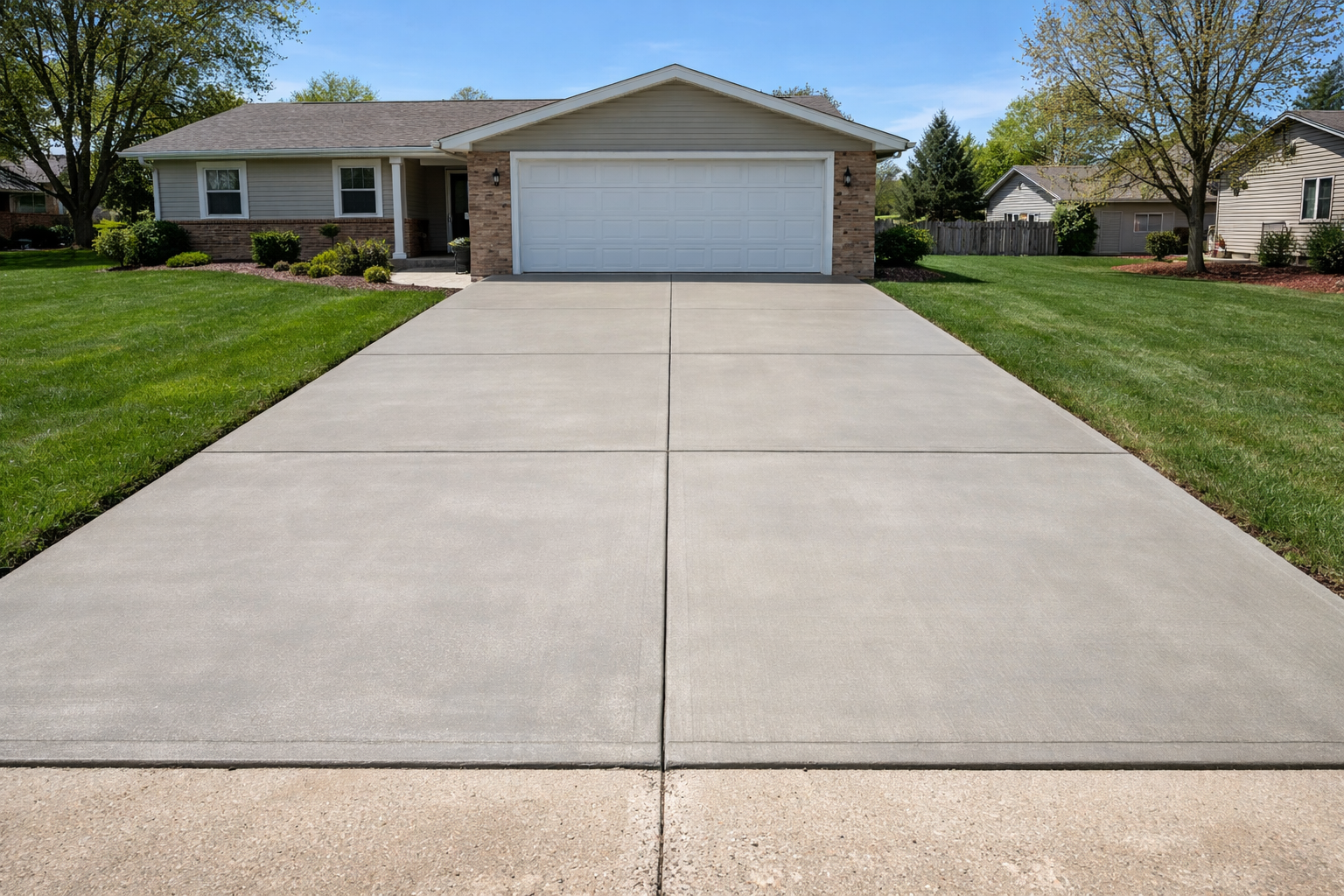
| Standard concrete (4") | $8–$12 | $4,800–$7,200 |
| Reinforced concrete (5"–6") | $10–$15 | $6,000–$9,000 |
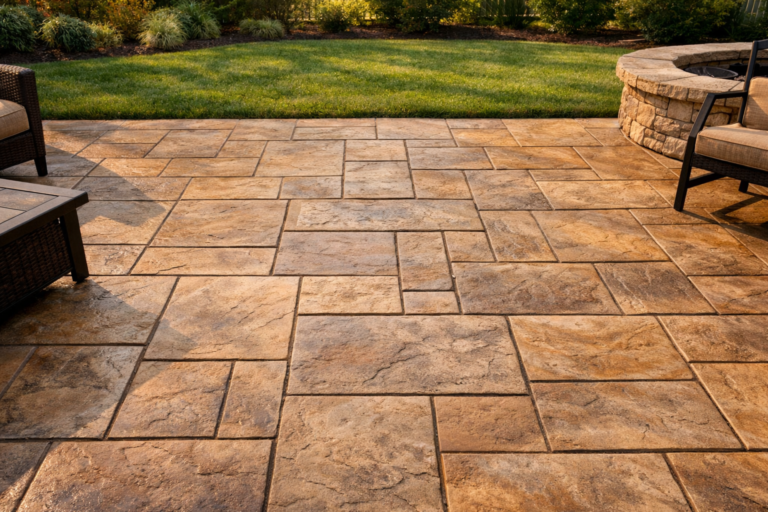
| Stamped/decorative concrete | $12–$20 | $7,200–$12,000 |
| Asphalt | $5–$8 | $3,000–$4,800 |
| Interlocking pavers | $15–$25 | $9,000–$15,000 |
These numbers include tear-out of the existing driveway, grading, base preparation, and installation. They do not include permits, apron replacement, or significant drainage work — all of which I’ll cover below.
A few things to understand about these ranges: the low end assumes straightforward access, minimal grading, and a simple rectangular layout. The high end reflects larger driveways, challenging site conditions (which are common in Addison), or decorative finishes.
Why Addison Driveways Cost What They Do
The Soil Problem Nobody Talks About
Addison sits on glacial till — a mix of clay and silt that expands when wet and contracts when dry. If you’ve ever noticed your driveway sections lifting unevenly or your garage floor pulling away from the apron, that’s the clay doing its thing.
This matters for pricing because a responsible contractor won’t just pour on top of whatever’s underneath. In most Addison jobs, we’re excavating 8–10 inches below finished grade and putting down 4–6 inches of compacted CA-6 crusite limestone base before any concrete goes down. That base work adds $1.50–$3.00 per square foot compared to areas with sandy or well-drained soil. But skip it, and you’ll be replacing the driveway again in 8 years instead of 25.
Freeze-Thaw Is the Real Enemy
We get roughly 100 freeze-thaw cycles per winter in the Chicago suburbs. That’s 100 times the moisture in your concrete expands, contracts, and works at every crack and joint. This is why you’ll see driveways in Addison that are five years old and already falling apart — they were poured without proper air entrainment, with too-thin sections, or without adequate control joints.
A properly specified driveway in our climate needs 4,000 PSI concrete with 6% air entrainment, fiber mesh reinforcement at minimum, and control joints cut at 8–10 foot intervals. If your contractor’s bid doesn’t mention air entrainment or PSI rating, ask — and if they don’t have an answer, find someone else.
The Tear-Out Factor
Replacing an existing driveway means demolishing and hauling away the old one. In Addison, tear-out and disposal typically runs $2–$4 per square foot. For a standard 600 sq ft driveway, that’s $1,200–$2,400 just to remove what’s already there.
The cost depends on thickness (older driveways poured in the 1970s and 80s are sometimes 6–8 inches thick), whether there’s rebar embedded in the concrete, and how accessible the site is for equipment. If a Bobcat can’t get to your backyard, manual demolition drives costs up significantly.
The Permit Situation in Addison
The Village of Addison requires a permit for driveway replacement. As of 2026, the permit fee is modest — typically $50–$100 — but the inspection requirements matter more than the fee.
Addison’s Building Department wants to see that the new driveway meets village code for setbacks, drainage, and impervious surface coverage. If you’re expanding your driveway footprint (adding width or extending the length), you may trigger a review of your lot’s stormwater management. DuPage County has been tightening stormwater rules, and Addison follows those guidelines.
Your contractor should be pulling this permit. If they suggest skipping it to "save you money," that’s a red flag. An unpermitted driveway can create problems when you sell the house, and the village can require removal of non-compliant work.
The Apron: The Most Overlooked Cost
The apron is the section of driveway between the sidewalk and the street — and in Addison, it’s technically on the village right-of-way. Replacing the apron is a separate line item, typically $1,500–$3,000, and requires its own permit and inspection.
Here’s what catches homeowners off guard: the village may require you to replace the apron if it’s deteriorated, even if you only planned to replace the driveway behind the sidewalk. And if the parkway (the grass strip between the sidewalk and curb) gets torn up during the project, you’re responsible for restoring it.
Many contractors include the apron in their bid. Some don’t. Make sure you know what you’re comparing when you look at multiple quotes.
Hidden Costs That Show Up Mid-Project
After three decades in this business, here are the costs that surprise homeowners most often:
Drainage corrections ($500–$2,500). If your old driveway was pitched toward the garage or toward a neighbor’s property, the village inspector may require regrading. This is especially common on the older lots south of Lake Street where original grading has settled over the decades.
Utility conflicts ($300–$1,000). Addison has a mix of overhead and buried utilities. If there’s a gas line, water shut-off, or ComEd conduit running under your driveway, the contractor needs to work around it. Call JULIE (811) before any excavation — it’s free and it’s the law.
Tree root removal ($200–$800). Those big silver maples that line the streets in the older Addison neighborhoods? Their roots love to grow right under driveways. Removing them and backfilling properly adds time and cost.
Sidewalk replacement ($500–$1,500). If the public sidewalk crossing your driveway approach is cracked or lifted, the village may require you to replace that section as a condition of the driveway permit.
Concrete vs. Asphalt: Which Makes Sense in Addison?
I’m a concrete contractor, so take this with appropriate skepticism — but in the western suburbs, concrete is almost always the better long-term investment.
Concrete lasts 25–30 years with proper installation and minimal maintenance. The upfront cost is higher, but the per-year cost is lower. It handles freeze-thaw well when properly air-entrained, doesn’t soften in summer heat, and adds more to resale value.
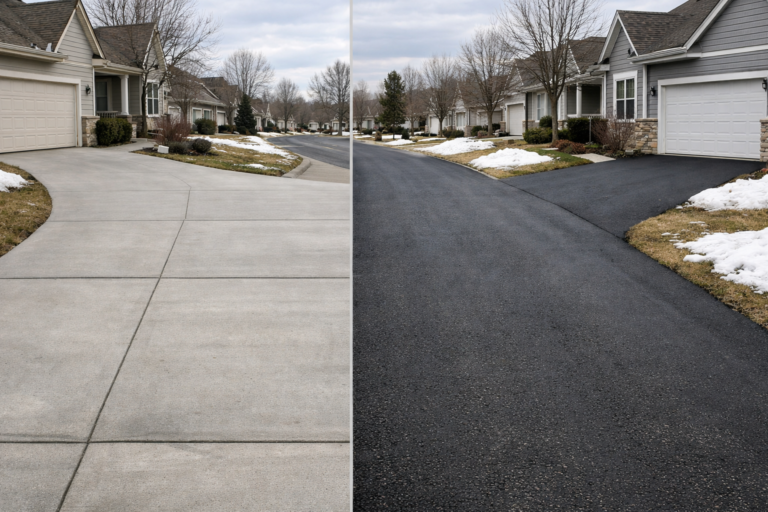
Asphalt costs 30–40% less upfront but needs seal-coating every 2–3 years ($150–$300 each time) and typically lasts 15–20 years. It gets soft in extreme heat — not ideal for a garage approach where you’re parking in the same spot every day. That said, asphalt is more forgiving of minor ground movement, which is worth considering on Addison’s clay soils.
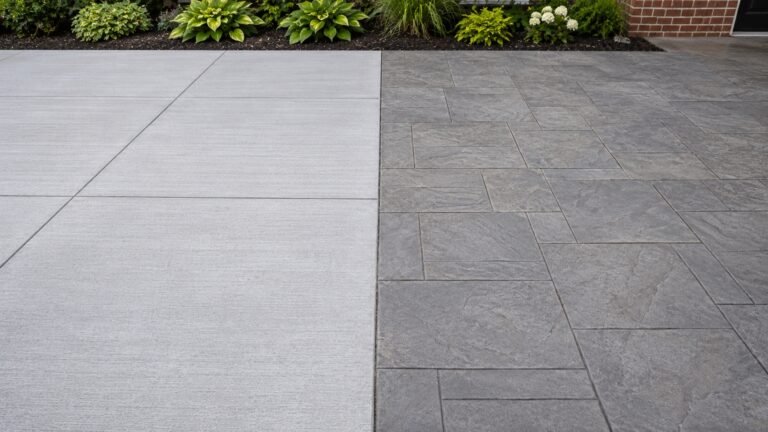
Pavers look great and last decades, but the upfront cost is substantially higher and they require periodic re-leveling as the base settles. For a statement driveway on a higher-value home, they’re worth considering. For a standard residential driveway, they’re usually overkill from a cost-benefit perspective.
When to Replace vs. When to Repair
Not every damaged driveway needs full replacement. Here’s my general rule of thumb:
Repair makes sense when you have isolated cracks (less than a quarter-inch wide), one or two settled sections, or minor surface scaling. Mudjacking or polyurethane foam injection ($500–$1,500) can level settled sections. Crack sealing ($200–$500) buys time on cosmetic cracks.
Replacement makes sense when you have multiple sections heaving or settling at different levels, widespread cracking across more than 30% of the surface, the driveway is 25+ years old, or you’re seeing standing water pooling against the garage or foundation. At that point, you’re spending good money on a driveway that’s past its service life.
How to Get an Accurate Quote
When you’re ready to get pricing, here’s what to look for in a legitimate bid:
The quote should specify concrete thickness, PSI rating, air entrainment percentage, base material and depth, control joint spacing, and whether tear-out and haul-away are included. It should also state whether the apron is included or separate, and whether the permit fee is included.
Get three bids. In Addison and the surrounding suburbs, I’d expect the bids to cluster within 15–20% of each other for the same scope of work. If one bid is dramatically lower, they’re either cutting corners on base preparation, using lower-spec concrete, or planning to skip the permit.
The Best Time to Pour in Addison
Concrete season in the Chicago suburbs runs roughly April through November, with the sweet spot being May through October. Concrete needs ambient temperatures above 50°F for proper curing, and ideally above 40°F at night for the first 48 hours.
Spring is the busiest season — everyone notices their driveway damage after the winter thaw — so if you can wait until late summer or early fall, you’ll often find contractors more available and sometimes willing to negotiate on pricing. October pours are fine as long as the overnight temperatures cooperate.
Planning Your Driveway Project
A driveway replacement is one of the more straightforward home improvement projects, but it still requires some homework. Get your quotes in winter or early spring, verify your contractor is licensed and insured, confirm they’ll pull the Addison permit, and ask specifically about base preparation and concrete specifications.
The right contractor will be happy to walk you through all of this. If they’re not willing to explain their process and materials, that tells you something.
Related Guides
Concrete vs. Asphalt Driveway in Hoffman Estates — Compare costs, durability, and winter performance for these two popular driveway materials.
Patio Installation in Addison, IL — If you’re investing in your property’s exterior, explore patio options for your Addison home.
How to Choose a Remodeling Contractor — Red flags, licensing verification, and the right questions to ask before hiring.
Mike Dalton has over 30 years of experience in concrete and outdoor construction across Chicago’s western suburbs. He contributes practical, field-tested advice to Home Remodel Advice based on decades of hands-on project work in communities like Addison, Schaumburg, and Elk Grove Village.