
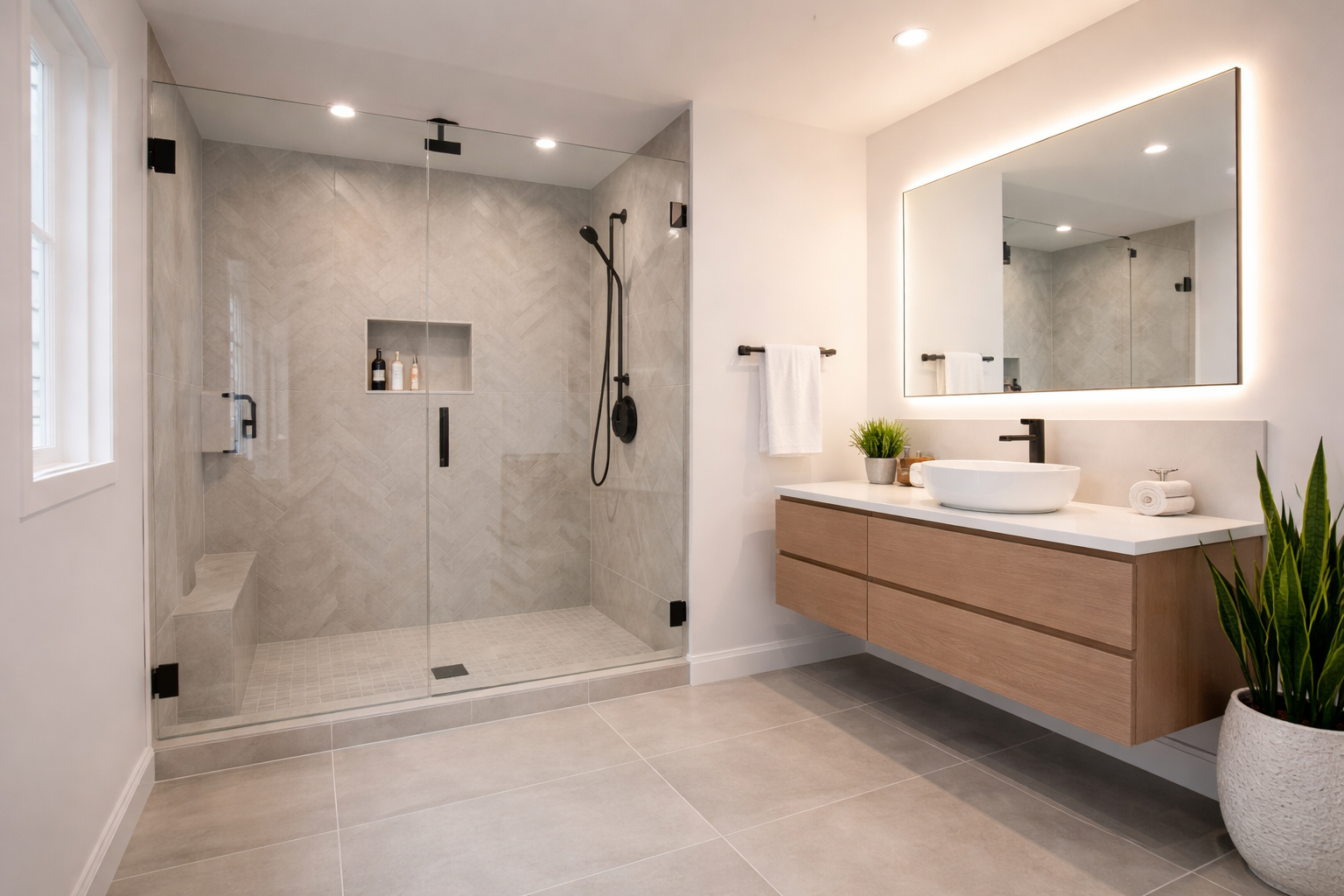
Bathroom Renovation
Real costs, tile options, and practical planning for western suburbs bathroom projects.
🚿 Bathroom Remodel Cost Ranges
| Project Scope | Typical Cost Range | What’s Included |
|---|---|---|
| Cosmetic refresh | $5,000–$12,000 | New vanity, faucet, mirror, lighting, paint, hardware |
| Mid-range remodel | $15,000–$30,000 | New tile, vanity, tub/shower, toilet, flooring, lighting, ventilation |
| High-end remodel | $30,000–$55,000+ | Custom tile, frameless glass shower, premium fixtures, heated floors, layout changes |
| Tub-to-shower conversion | $8,000–$18,000 | Remove tub, new shower pan/base, tile walls, glass door, plumbing modifications |
| Half-bath to full-bath conversion | $20,000–$40,000+ | Add shower/tub, expand space, new plumbing runs, structural work |
The most common bathroom remodel I do in the western suburbs is the mid-range full remodel on a 5×8 builder bathroom — that’s the standard layout in Schaumburg split-levels, Arlington Heights ranches, and Elk Grove Village colonials from the 1970s–1990s. These projects typically run $18,000–$28,000 and take 4–6 weeks.
🏠 Common Bathroom Projects by Home Type
The 5×8 builder bathroom (most common). These exist in nearly every ranch and split-level built between 1965 and 1990 across the western suburbs. The layout is always the same: tub against the back wall, toilet next to it, vanity across from the toilet. Most homeowners want to replace the tub with a walk-in shower, update the vanity, retile everything, and improve lighting and ventilation. Budget $18,000–$28,000 for a quality remodel that keeps the same footprint.
Master bathroom upgrade. Homes from the 1980s–1990s often have master bathrooms that feel dated — builder-grade tile, single vanity, basic lighting. Popular upgrades include double vanity (if space allows), frameless glass shower enclosure, freestanding tub, heated tile floors, and updated lighting with dimming. Budget $25,000–$45,000 depending on scope and finish level.
Basement bathroom addition. If you’re finishing a basement and want to add a bathroom, the big cost driver is whether you have an existing rough-in (drain lines already in the slab from original construction). With a rough-in: $12,000–$22,000. Without one (requires cutting the concrete slab to run new drains): $18,000–$35,000. Many 1970s–1980s homes in the western suburbs do have basement rough-ins — check before assuming you need slab work.
🔲 Tile — The Make-or-Break Decision
Tile is where a bathroom goes from functional to beautiful. It’s also where costs can escalate quickly if you’re not deliberate about your choices.
Ceramic tile ($3–$8 per sq ft material): The workhorse option. Durable, water-resistant, available in endless colors and patterns. For floor tile, go with porcelain (a denser, harder form of ceramic) — it handles moisture and wear better, especially in high-traffic family bathrooms.
Large-format porcelain ($6–$15 per sq ft material): The trend in the western suburbs right now. 12×24 or 24×24 tiles create a clean, modern look with fewer grout lines. They require a perfectly flat substrate and skilled installation — not the place to cut corners on labor.
Natural stone ($10–$30+ per sq ft material): Marble, travertine, and slate are stunning but require sealing and more maintenance. Marble in a shower is beautiful until you realize it stains and etches if not properly maintained. For most western suburbs homeowners, a porcelain tile that mimics natural stone gives you 90% of the look at half the cost and a fraction of the maintenance.
Tile installation labor: Expect $8–$18 per square foot for installation in this market, depending on tile size, pattern complexity, and whether you’re doing niche shelves, accent bands, or complex layouts. A straightforward subway tile shower costs less to install than a herringbone pattern with accent strips.
🛁 Tub-to-Shower Conversions
The tub-to-shower conversion is the single most requested bathroom project in the western suburbs. Homeowners with older children or aging-in-place concerns want to eliminate the tub they never use and replace it with a walk-in shower. Here’s what’s involved.
The plumbing changes are the biggest cost factor. A bathtub drain sits in a different location and at a different height than a shower drain. Most conversions require modifying the drain line, which means opening the floor or ceiling below. If the bathroom is above a finished space, accessing the plumbing adds cost.
A quality tub-to-shower conversion in the western suburbs runs $8,000–$18,000 depending on the shower size, tile selection, and whether you’re doing a glass enclosure (frameless glass adds $1,500–$3,500 over a curtain rod). This almost always requires a plumbing permit — despite what some contractors may tell you. Always verify requirements with your municipality’s building department, such as Arlington Heights Community Development or your local village hall.
Related guide: Do You Need a Building Permit for a Bathroom Remodel in Arlington Heights?
⚠️ Hidden Costs in Older Bathrooms
Every bathroom remodel in a 35–50 year old home has surprises behind the walls. Budget 10–15% contingency and expect at least one of these.
Water damage ($500–$3,000). Years of minor leaks around the tub, toilet, or shower create subfloor rot and mold that’s invisible until demolition day. The longer the bathroom has been in service, the more likely you’ll find damage that needs remediation before new tile goes down.
Plumbing upgrades ($1,000–$4,000). Galvanized supply lines in pre-1980 homes are often partially corroded. Cast iron drain stacks from the 1960s may be near end-of-life. Replacing these while the walls are open is dramatically cheaper than doing it as an emergency repair later.
Electrical upgrades ($500–$2,000). Many older bathrooms in the western suburbs have a single circuit shared between lights and one outlet — no GFCI protection, no exhaust fan circuit, and not enough capacity for modern fixtures. Bringing the electrical up to current code is typically required when you pull a permit.
Ventilation ($300–$1,500). Proper bathroom ventilation isn’t optional — it’s the difference between a bathroom that stays clean and one that grows mold within a year. Many older homes either have no exhaust fan or have one that vents into the attic (which causes its own moisture problems). A properly ducted exhaust fan venting to the exterior is a code requirement in most western suburb municipalities.
📋 Permits and Code Requirements
Most western suburb municipalities require a permit for any bathroom work involving plumbing changes, electrical modifications, or structural alterations. Cosmetic work — painting, replacing a vanity in the same location, new hardware — typically doesn’t require a permit.
The permit process for bathroom remodels is generally straightforward: your contractor submits the scope of work, you pay a fee ($100–$350 depending on the village), and the project gets inspected at rough-in (before walls close) and at final completion. The inspection protects you — it ensures the plumbing, electrical, and waterproofing are done correctly.
💡 Design Decisions That Add Value
After 15 years of designing bathrooms in the western suburbs, here are the upgrades that consistently deliver the best return — both in daily enjoyment and resale value.
Heated tile floors ($500–$1,500 for materials, installed during tile work). The cost is modest when done during a remodel (the heating mat goes under the tile before installation). In a Midwest home where bathroom floors are cold 6 months of the year, this is the upgrade every homeowner says they love most.
Proper lighting design. Replace the single vanity light bar with layered lighting: recessed ceiling lights for general illumination, sconces flanking the mirror for task lighting, and a dimmer switch for everything. Total cost: $500–$1,500 installed. Total impact: enormous.
Frameless glass shower enclosure. Nothing makes a bathroom feel bigger and more modern than replacing a curtain or framed glass door with frameless glass. It’s a $1,500–$3,500 investment that transforms the room.
Comfort-height toilet. Only $50–$100 more than a standard-height toilet and dramatically more comfortable for adults. There’s no reason not to upgrade during a remodel.
Ready to Plan Your Bathroom Renovation?
A bathroom remodel is a complex project that rewards careful planning and skilled execution. If you’re ready to start the conversation, PHI3 Construction has been renovating bathrooms across the western suburbs for over 30 years. Request a free estimate and we’ll walk through your options.
About Sarah Chen — Sarah is a design consultant with 15 years of experience helping western suburbs homeowners plan kitchen and bathroom renovations. She balances aesthetics with budget reality, focusing on design choices that work in real suburban homes.