
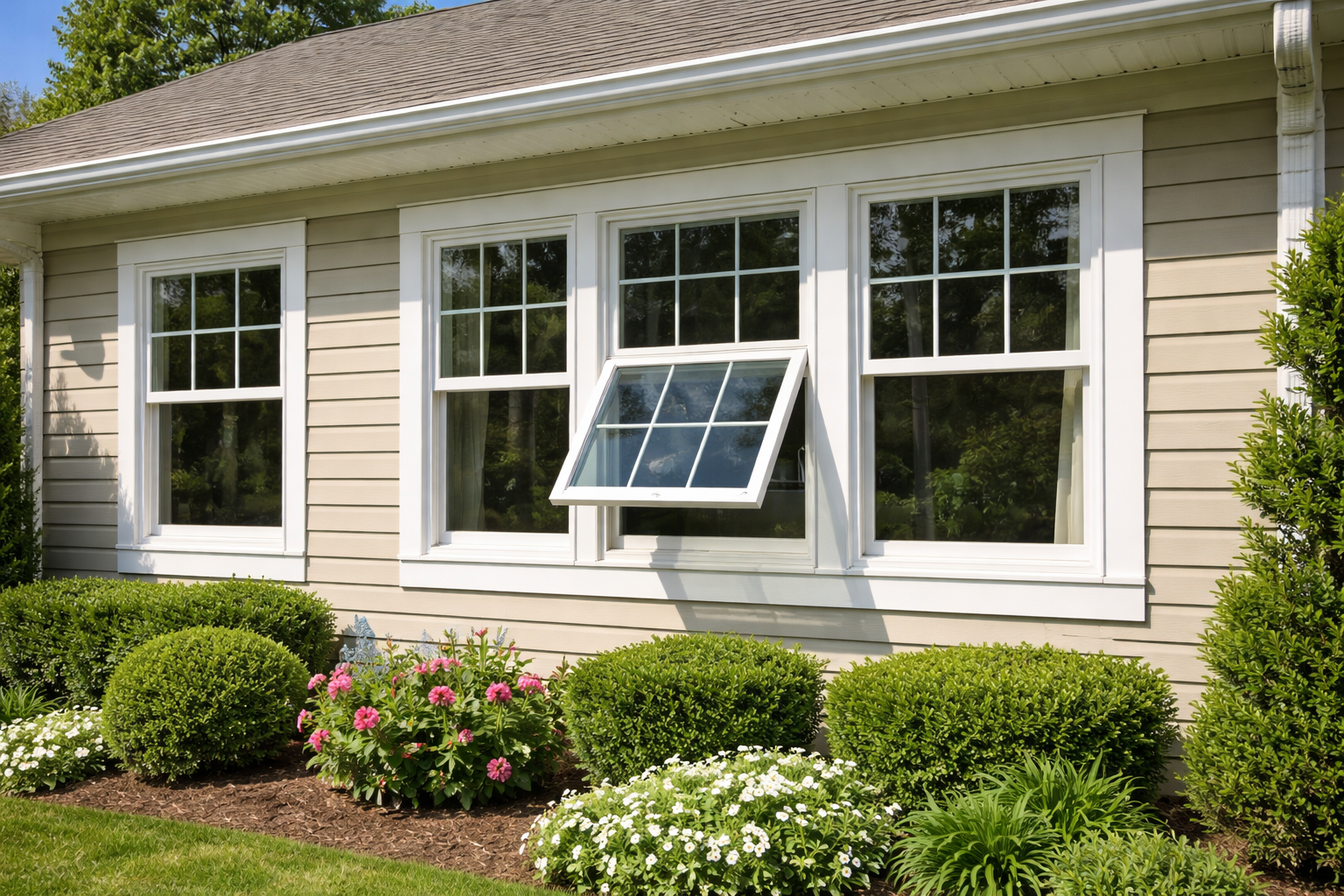
Windows & Doors
Real costs, energy efficiency, and practical advice for western suburbs window and door projects.
🪟 Replacement Window Costs
| Window Type | Cost per Window (installed) | Whole-House (15 windows) |
|---|---|---|
| Vinyl (builder grade) | $350–$600 | $5,250–$9,000 |
| Vinyl (premium — Pella, Andersen, Marvin) | $600–$1,100 | $9,000–$16,500 |
| Fiberglass (Infinity, Marvin Ultrex) | $800–$1,400 | $12,000–$21,000 |
| Wood (Andersen, Marvin) | $900–$1,800 | $13,500–$27,000 |
| Bay/bow window | $2,500–$6,000 | — |
These prices include the window unit, installation, interior trim, exterior caulking, and cleanup. They’re based on standard-size double-hung replacement windows in western suburbs homes. Oversized windows, custom shapes, and structural modifications (enlarging an opening) cost more.
The most common project I see: a homeowner with a 1970s–1980s home in Schaumburg, Arlington Heights, or Elk Grove Village replacing 12–18 original single-pane aluminum windows with vinyl double-pane Low-E windows. Total project: $8,000–$18,000 depending on the number of windows and the brand selected.
🌡️ Energy Efficiency — Why It Matters More Here
Chicago’s climate pushes windows harder than almost anywhere else in the country. We go from 95°F summers to -15°F winter wind chills, and we spend 5–6 months heating our homes. Single-pane windows from the 1970s leak conditioned air like a screen door — homeowners with original windows are typically overspending $400–$800 per year on heating and cooling versus what they’d spend with modern replacements.
What to specify for the western suburbs: At minimum, double-pane glass with Low-E coating and argon gas fill. The U-factor (resistance to heat transfer) should be 0.30 or lower — the lower the number, the better the insulation. For north-facing windows that get minimal sun in winter, consider triple-pane (U-factor around 0.20) if the budget allows.
Look for the ENERGY STAR Northern Climate Zone certification — it means the window meets the stricter insulation requirements for our heating-dominated climate. This also qualifies you for federal energy tax credits (currently up to $600/year for qualifying windows under the Inflation Reduction Act provisions).
🚪 Entry and Patio Door Costs
| Door Type | Installed Cost |
|---|---|
| Steel entry door (basic) | $1,200–$2,500 |
| Fiberglass entry door (Therma-Tru, Masonite) | $2,000–$4,500 |
| Wood entry door (custom) | $3,000–$8,000+ |
| Sliding patio door (vinyl) | $1,500–$3,500 |
| Sliding patio door (fiberglass/wood) | $3,000–$6,000 |
| French patio doors (pair) | $3,500–$7,000 |
| Storm door | $400–$1,200 |
Entry door replacement is the highest-ROI exterior project you can do. Industry data consistently shows front door replacement recouping 90–100%+ of its cost at resale — higher than any other single exterior improvement. In the western suburbs, where curb appeal directly affects home value, a quality fiberglass entry door at $2,500–$4,000 installed is one of the smartest investments you can make.
Patio door replacement is equally impactful for different reasons. Most 1970s–1980s homes in the western suburbs have original sliding patio doors with single-pane glass, worn-out rollers, and drafty weatherstripping. A modern sliding or French patio door dramatically improves insulation, security, and the visual connection between your kitchen/living area and the backyard.
🏠 Western Suburbs Window Considerations
Aluminum-frame windows (1970s–1980s homes). If your home has original aluminum-frame windows — common in Schaumburg, Hoffman Estates, Elk Grove Village, and Palatine — you’re losing significant energy through the frames themselves. Aluminum conducts heat rapidly, which is why you see condensation and frost on the interior side of these windows in winter. Replacing them with vinyl or fiberglass eliminates this problem entirely.
Wood-frame windows (pre-1970s homes). Older homes in Arlington Heights, Elmhurst, and some of the established Addison neighborhoods may have original wood windows. If the frames are in good condition, storm window additions or glass-only replacements can be cost-effective. If the frames are rotting (check the sills first — that’s where damage starts), full replacement is the better path.
HOA considerations. Some western suburbs developments have HOA restrictions on window styles, colors, and grid patterns. Verify before ordering — a window that doesn’t match HOA requirements may need to be replaced again at your cost.
🔧 Insert vs. Full-Frame Replacement
This is the most important installation decision, and it’s where some window companies cut corners to offer lower prices.
Insert (pocket) replacement keeps the existing window frame in the wall and slides a new window unit into it. It’s faster, less disruptive, and costs 20–30% less. It works well when the existing frames are in good condition — no rot, no water damage, still square and level.
Full-frame replacement removes everything down to the rough opening — old frame, sill, exterior trim — and installs a complete new window with new flashing and weatherproofing. It costs more but is the right choice when the existing frames are damaged, when you want to change the window size, or when you need to correct water infiltration issues around the opening.
In the western suburbs, I see a roughly 70/30 split — 70% of replacement window jobs are inserts, 30% require full-frame for at least some of the openings. A reputable installer will assess each opening individually rather than defaulting to the cheaper option across the board.
📋 Permits and Installation Timeline
Like-for-like window replacement (same size, same location) generally doesn’t require a building permit in most western suburb municipalities. Adding new window openings, enlarging existing openings, or making structural changes to accommodate different window sizes does require a permit.
A whole-house window replacement (12–18 windows) typically takes 1–2 days of on-site installation time. Lead time for ordering windows runs 3–6 weeks depending on the manufacturer and whether you’re ordering standard or custom sizes. Plan to order in early spring for summer installation, or late summer for fall installation before heating season.
⚠️ Watch Out For
The window replacement industry has more aggressive sales tactics than almost any other home improvement category. A few things to watch for when shopping in the western suburbs.
Inflated “before discount” pricing. Some national window companies quote $1,200–$1,500 per window, then offer a “today only” discount that brings it to $800. The $800 price was the real price all along. Get three independent quotes and you’ll see the actual market rate quickly.
“Lifetime warranty” claims. Read the fine print. Many window warranties are pro-rated, meaning coverage decreases over time. And the warranty is only as good as the company — if the installer goes out of business, the labor warranty goes with them. Choose an established local installer over a franchise operation when possible.
Unnecessary upgrades. Triple-pane windows are excellent for north-facing walls but overkill for south-facing windows that benefit from solar heat gain in winter. A good installer will recommend different specs for different exposures rather than pushing the most expensive option everywhere.
Related guide: How to Choose a Remodeling Contractor
Ready to Replace Your Windows or Doors?
If you’re dealing with drafty windows, a worn-out patio door, or just want to improve your home’s energy efficiency and curb appeal, PHI3 Construction can help. We’ve been working on western suburbs homes for over 30 years and we’ll give you an honest assessment of what you need — not what’s most expensive. Request a free estimate.
About Mike Dalton — Mike has over 30 years of hands-on construction experience across Chicago’s western suburbs, covering everything from concrete and outdoor projects to windows, doors, and general remodeling. He contributes practical, field-tested advice to Home Remodel Advice.