
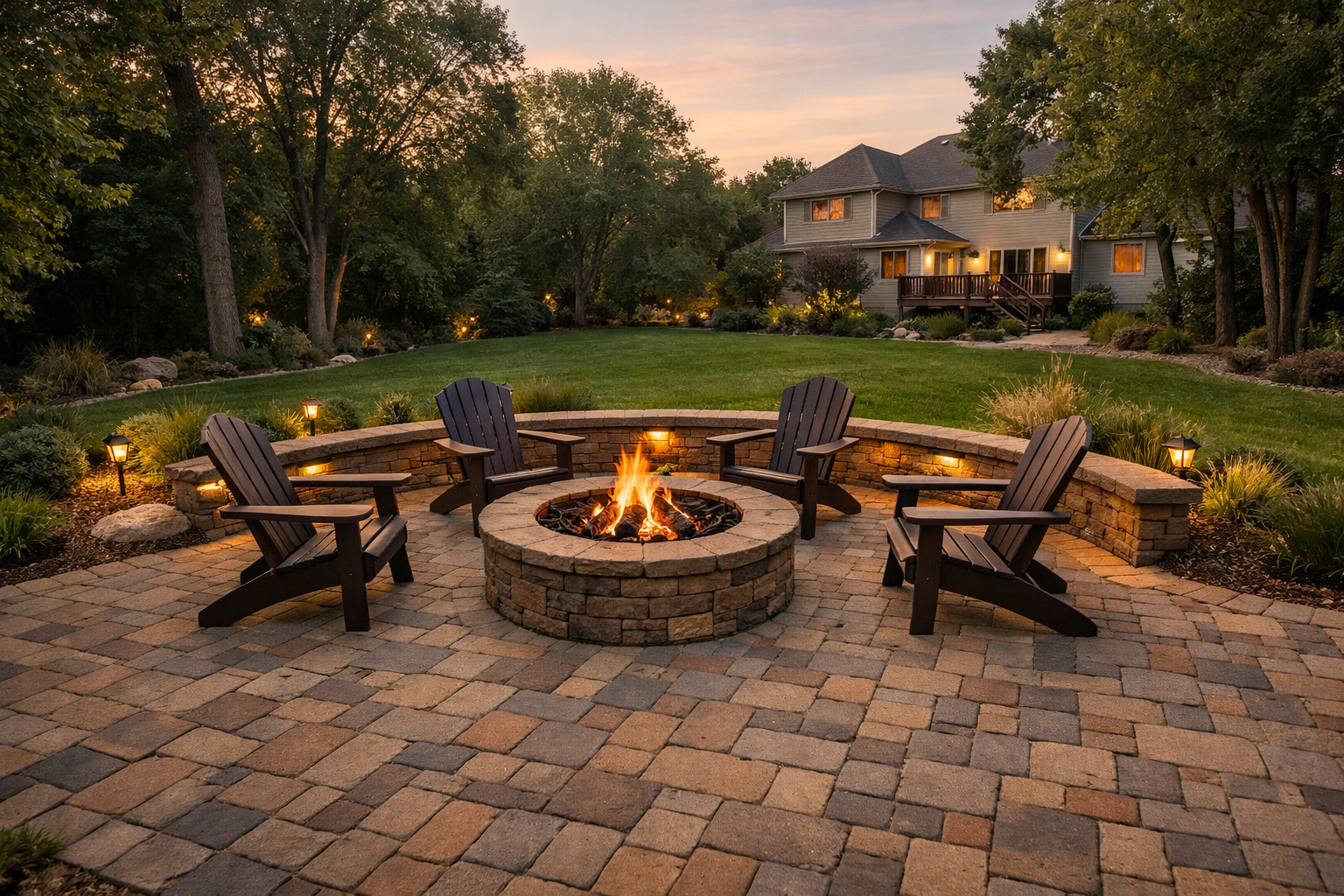
Patio & Outdoor Living
Real costs, material options, and design ideas for Chicago-area outdoor spaces.
🌿 Patio Cost Ranges
| Patio Type | Cost (300 sq ft typical) | Cost per sq ft |
|---|---|---|
| Poured concrete (broom finish) | $3,500–$7,500 | $12–$18 |
| Stamped concrete | $5,500–$10,000 | $18–$28 |
| Concrete pavers (standard) | $6,000–$14,000 | $20–$35 |
| Concrete pavers (premium/large-format) | $9,000–$16,000 | $30–$48 |
| Natural flagstone (dry-laid) | $9,000–$14,000 | $30–$45 |
| Bluestone (on concrete base) | $12,000–$18,000+ | $40–$60 |
These costs include materials, labor, full base preparation (critical on our clay soil), and cleanup. They don’t include add-ons like fire pits, seating walls, lighting, or outdoor kitchen connections — those are separate line items I’ll cover below.
Related guide: Patio Installation in Addison, IL — Materials, Costs, and What Your Contractor Won’t Tell You
🧱 Material Comparison for Chicago’s Climate
Not every patio material performs equally in the western suburbs. Our freeze-thaw cycles, clay soil movement, and road salt exposure make some materials significantly better choices than others. The Interlocking Concrete Pavement Institute provides technical guidance on paver installation standards — here’s how the common options compare in our climate.ome materials excellent choices and others risky ones.
Concrete pavers are the best all-around choice for this climate. Individual units flex with ground movement instead of cracking. If a section heaves, you pull up the affected pavers, re-level the base, and reset them — a $200–$500 repair instead of a $2,000 concrete patch. Brands like Unilock, Belgard, and Techo-Bloc all perform well here. Pavers need polymeric sand replenished every 3–5 years ($200–$400), but that’s minimal maintenance for a surface that lasts 25+ years.
Poured concrete offers the lowest cost per square foot and performs well when properly specified — 4,000 PSI with 6% air entrainment, fiber mesh reinforcement, and control joints every 8–10 feet. The downside: when concrete cracks (and in Illinois, it eventually will), repairs are visible. Stamped concrete looks great but requires resealing every 2–3 years to maintain the color and pattern.
Natural stone is the premium option. Bluestone and dense granite handle freeze-thaw well. Some limestone and sandstone varieties are porous and will spall (flake apart) after repeated freeze-thaw — always ask your contractor about the specific stone’s freeze-thaw rating before committing.
🔥 Popular Add-Ons and Feature Costs
| Feature | Typical Cost |
|---|---|
| Built-in fire pit (gas or wood) | $2,500–$6,000 |
| Seating wall / retaining wall | $40–$80 per linear foot |
| Low-voltage LED landscape lighting | $1,500–$4,000 |
| Outdoor kitchen stub-out (gas, electric, water) | $2,000–$5,000 |
| Full outdoor kitchen (built-in grill, counter, storage) | $8,000–$25,000+ |
| Pergola (wood) | $4,000–$10,000 |
| Pergola (aluminum/vinyl) | $6,000–$15,000 |
| Steps from elevated door to patio | $1,000–$3,000 |
My advice: build the patio first and get the base and surface right. Features like fire pits and seating walls can be added in a later phase without disrupting the original patio, as long as your contractor plans for them upfront — running conduit for future lighting, stubbing gas lines for a future fire pit, etc.
🌧️ Drainage — The #1 Issue Nobody Plans For
Drainage is the most overlooked aspect of patio construction in the western suburbs, and it’s the one that causes the most expensive problems when ignored.
Every patio needs to slope away from your house at a minimum of 1/4 inch per foot. On our clay soil, water doesn’t percolate — it sits. If your patio directs runoff toward the foundation, you’re trading a nice outdoor space for basement water problems. If the yard is flat or slopes toward the house, a French drain or channel drain system ($1,500–$4,000) is non-negotiable.
The base preparation under the patio is equally important for drainage. In Addison, Schaumburg, and most of the western suburbs, proper patio base means excavating 8–12 inches of clay, installing 6–8 inches of compacted Class 3 aggregate, and ensuring water can move through and away from the base. This base work is 30–40% of the project cost — and it’s where quality contractors separate themselves from the cheap bids.
📐 Design Tips for Western Suburbs Lots
Most homes in the western suburbs sit on 60–75 foot wide lots with modest backyards. A few design principles make the most of the space.
A 300 square foot patio (roughly 15×20 feet) is the sweet spot for most lots — large enough for a dining table and seating area, not so large that it overwhelms the yard. For entertaining, 400–500 square feet with zones (dining area, lounge area, fire pit area) works well on larger lots.
Curved borders soften the look and work better than sharp rectangles on organic yard shapes. Mixed materials — pavers with a natural stone border, or a concrete patio with a paver accent band — add visual interest without significantly increasing cost.
Think about sight lines from inside the house. Your patio should look inviting from the kitchen or family room window — that’s what draws you outside. Lighting is what makes the patio usable after sunset and during the shoulder season months of April and October when it gets dark early.
📋 Permits and Timing
A standard detached patio on grade typically doesn’t require a building permit in most western suburb municipalities. However, patios with attached structures (pergolas, roof covers), electrical work (lighting, outlets), or gas lines (outdoor kitchen, fire pit) usually do. If you’re building near the property line, verify setback requirements with your village — most villages require structures to be at least 3 feet from rear and side property lines.
Best timing: Late summer through mid-October is ideal for patio installation in the Chicago area. The ground is dry and stable, contractors have more availability than spring, and pricing may be more competitive. Aim to have the project completed by early November before the first hard freeze.
Ready to Plan Your Outdoor Space?
If you’re thinking about a patio, fire pit, or outdoor living project in the western suburbs, PHI3 Construction has been building outdoor spaces across the area for over 30 years. We’ll walk your yard, talk through your options, and give you an honest estimate. Request a free estimate — no pressure, no obligation.
About Mike Dalton — Mike has over 30 years of hands-on construction experience across Chicago’s western suburbs. He specializes in outdoor construction including patios, driveways, and outdoor living spaces, and contributes practical, field-tested advice based on decades of project work.