
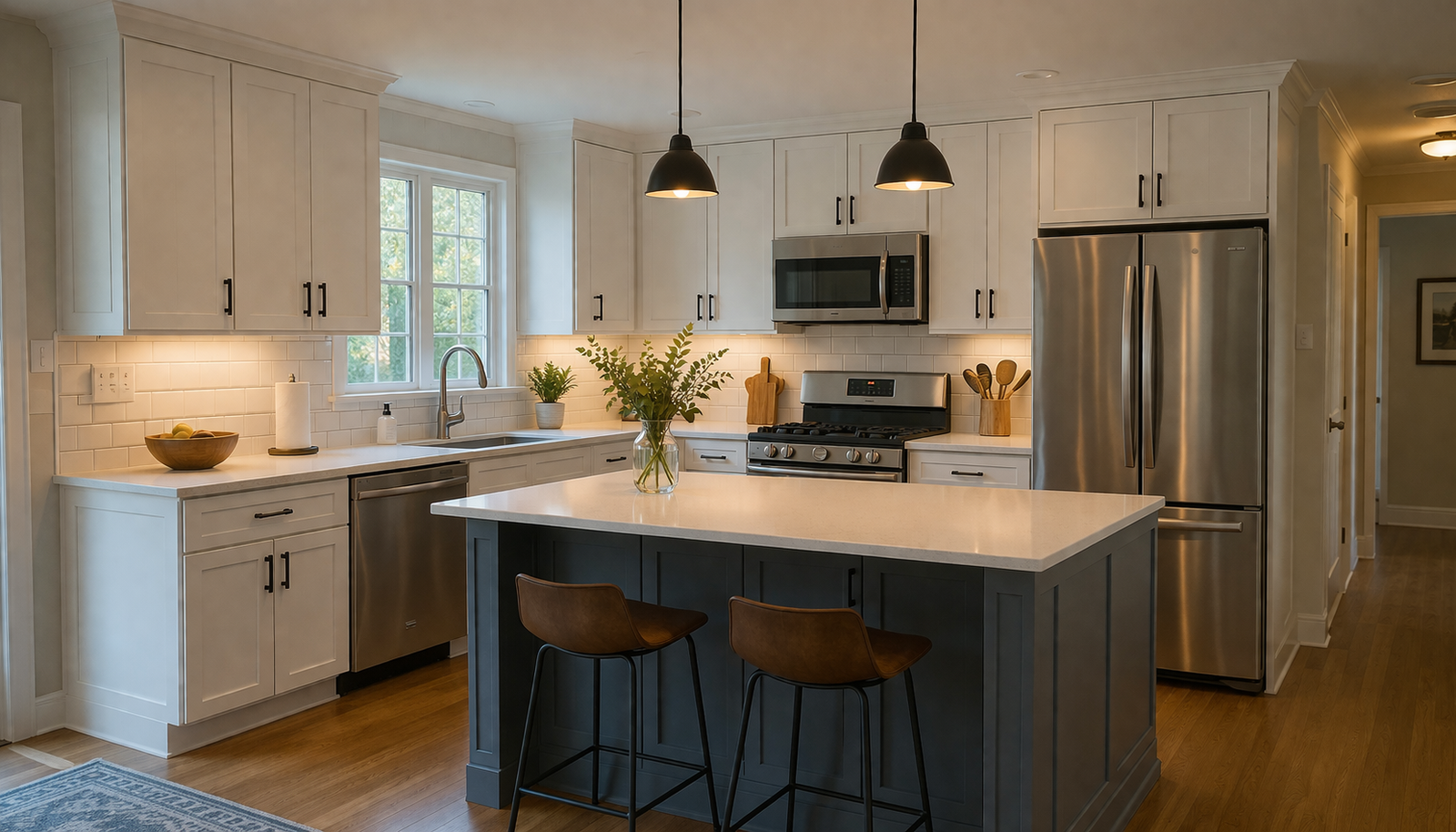
Kitchen Remodeling
Real costs, design guidance, and practical planning for western suburbs kitchen projects.
🍳 Kitchen Remodel Cost Ranges
Kitchen remodel costs in the western suburbs vary dramatically based on scope. Here’s what projects actually cost in this market in 2026 — not national data, not what a website in California thinks you’ll pay.
| Project Scope | Typical Cost Range | What’s Included |
|---|---|---|
| Cosmetic refresh | $12,000–$22,000 | Cabinet refacing/painting, new countertops, backsplash, lighting, hardware |
| Mid-range remodel | $28,000–$55,000 | New cabinets, countertops, flooring, appliances, lighting, plumbing fixtures |
| High-end remodel | $55,000–$85,000+ | Custom cabinetry, premium countertops, pro appliances, structural changes, island |
| Layout change / wall removal | Add $5,000–$15,000 | Structural engineering, beam installation, relocated plumbing and electrical |
The single biggest factor driving cost isn’t the countertop material or the appliance brand — it’s whether you’re changing the layout. Keeping your sink, stove, and refrigerator in their current locations saves 15–25% of the total project cost because you avoid relocating plumbing, electrical, and potentially gas lines.
Related guide: Kitchen Remodel Cost in Schaumburg, IL — What to Expect in 2026
🏘️ What Western Suburbs Housing Stock Means for Your Kitchen
The age and style of your home shapes your kitchen remodel in ways that national guides don’t cover. The western suburbs are dominated by homes built between the late 1960s and early 1990s — split-levels, bi-levels, and ranch homes with kitchens that were perfectly adequate for their era but feel cramped and disconnected today.
Schaumburg, Hoffman Estates, Palatine (1970s–1980s): Mostly split-levels and ranch homes with galley or L-shaped kitchens, typically 100–180 square feet. Common issues include 100-amp electrical panels that can’t handle modern appliance loads, galvanized plumbing, and possible asbestos in floor tiles from pre-1980 construction. Expect $1,800–$5,000 in hidden costs for electrical and plumbing upgrades once you open walls.
Naperville, Wheaton, Glen Ellyn (1980s–2000s): Larger homes with bigger kitchens (150–250 square feet) but often with dated builder-grade finishes. These kitchens have better bones — newer electrical, copper plumbing, more space to work with — but homeowners here tend to want higher-end finishes that push budgets higher.
Addison, Elk Grove Village, Roselle (1960s–1970s): Ranch-style homes with smaller kitchens. The open-concept wall removal is the #1 request here — and it’s also where costs can escalate quickly because many of these interior walls are load-bearing. Budget $2,000–$6,000 for structural beam work if you’re opening up the kitchen.
🪵 Cabinets — The Biggest Budget Decision
Cabinets typically represent 30–40% of your total kitchen remodel budget. Understanding your options helps you allocate your money where it makes the most impact.
Stock cabinets ($5,000–$10,000 installed): Pre-manufactured in standard sizes. Brands like Hampton Bay, Diamond NOW, and Allen + Roth are available at Home Depot and Lowe’s with 2–3 week lead times. Quality has improved dramatically — for a mid-range kitchen in a $300K–$400K home, stock cabinets are often the smart choice that frees budget for better countertops or appliances.
Semi-custom cabinets ($10,000–$20,000 installed): Made to order with more style, color, and configuration options. KraftMaid, Yorktowne, and Waypoint are the brands I specify most in this market. Lead times run 4–8 weeks. This is the sweet spot for most western suburbs kitchen remodels.
Custom cabinets ($18,000–$35,000+ installed): Built to your exact specifications. Worth it when you have unusual dimensions, specific design requirements, or a high-end home where the kitchen needs to match the rest of the house. Lead times: 8–14 weeks.
My advice: don’t automatically default to the most expensive option. Walk into a kitchen with well-installed stock cabinets and quality hardware, and most people can’t tell the difference from semi-custom. Spend the savings on the countertop and backsplash — those are what your eyes actually focus on when you walk into the room.
🔲 Countertops — Material Comparison
| Material | Installed Cost (per sq ft) | Best For |
|---|---|---|
| Laminate (Formica, Wilsonart) | $25–$50 | Budget refreshes, rental properties |
| Butcher block | $40–$75 | Warm aesthetic, farmhouse style |
| Quartz (Cambria, Silestone, Caesarstone) | $55–$120 | Best all-around — durable, low maintenance, huge color range |
| Granite | $50–$100 | Natural stone look, heat resistant |
| Quartzite | $80–$150 | Premium natural stone, extremely durable |
| Marble | $75–$150 | Luxury aesthetic (requires more maintenance) |
Quartz dominates the western suburbs market right now, and for good reason. It’s virtually maintenance-free, available in hundreds of colors and patterns (including convincing marble looks without marble’s staining issues), and the installed cost difference between mid-grade quartz and premium granite is often only $1,500–$3,000 for a typical kitchen. For most homeowners in this market, quartz offers the best balance of aesthetics, durability, and value.
📐 Layout Planning That Actually Works
The work triangle (sink, stove, refrigerator) still matters, but modern kitchens are about more than just cooking efficiency. In the western suburbs, the most requested layout changes I see are opening a galley kitchen to the living area (the wall removal conversation), adding an island with seating for casual meals and homework, creating a dedicated coffee/beverage station, and improving pantry storage — especially in older homes where the original kitchen had almost none.
Before you fall in love with an open-concept layout from Pinterest, understand what’s involved. In most 1970s–1980s split-levels and ranches across Schaumburg, Hoffman Estates, and Elk Grove Village, the wall between the kitchen and living room is load-bearing. Removing it requires a structural engineer ($500–$1,500 for drawings), a steel or LVL beam ($2,000–$6,000 installed), and proper support columns. It’s absolutely doable, but it’s a real cost that has to be in the budget from day one.
📋 Permits for Kitchen Remodels
In most western suburb municipalities, a kitchen remodel requires a building permit if it involves any new electrical circuits. Check your village’s requirements through the Village of Schaumburg Community Development or your local municipality’s building department. Common triggers include dedicated circuits for dishwashers, disposals, and microwave outlets), plumbing changes (moving the sink, adding a pot filler, or running water to an island), structural modifications (wall removal, header installation), or HVAC changes (rerouting ductwork for a reconfigured layout).
Cosmetic-only work — painting cabinets, replacing countertops without moving plumbing, swapping light fixtures on existing wiring — generally doesn’t require a permit. When in doubt, call your village’s building department. They’d rather answer the question upfront than deal with enforcement later.
⏱️ Timeline Expectations
Realistic timelines for western suburbs kitchen projects in 2026: a cosmetic refresh takes 2–3 weeks. A mid-range remodel runs 6–10 weeks from demolition to final walkthrough. A high-end remodel with structural changes takes 10–16 weeks. Custom cabinetry adds 6–10 weeks of lead time before work begins — order early.
The biggest timeline risk isn’t construction — it’s material lead times. Countertop fabrication runs 2–3 weeks after template. Appliance availability varies wildly. Order everything as early as possible and have it staged before demolition day.
📈 Is a Kitchen Remodel Worth It?
In the western suburbs, a mid-range kitchen remodel typically recoups 60–75% of its cost at resale. But the real return is daily quality of life — you’ll use your kitchen more than any other room in the house. If you’re staying 5+ years, it’s one of the best investments you can make. If you’re selling within 1–2 years, focus on the cosmetic refresh level for the highest ROI per dollar spent.
Ready to Plan Your Kitchen Remodel?
The most important decision isn’t which countertop to choose — it’s finding a contractor you trust. If you’re planning a kitchen remodel in the western suburbs, PHI3 Construction has been helping homeowners transform their kitchens for over 30 years. Request a free estimate — no pressure, no obligation.
About Sarah Chen — Sarah is a design consultant with 15 years of experience helping western suburbs homeowners plan kitchen and bathroom renovations. She balances aesthetics with budget reality and resale value, focusing on design choices that actually work in suburban Chicago homes.