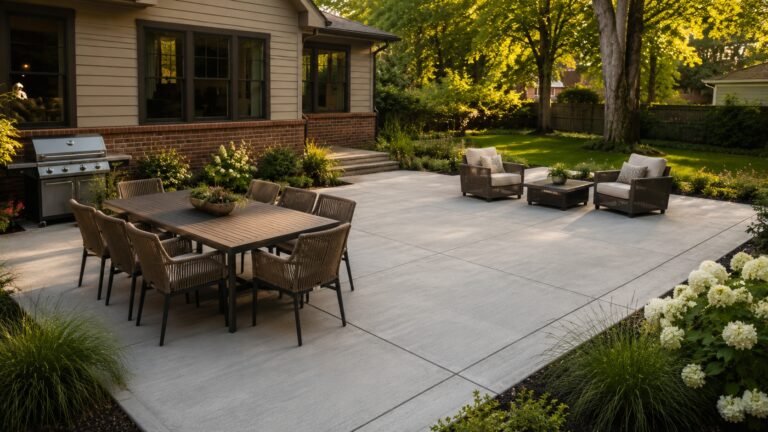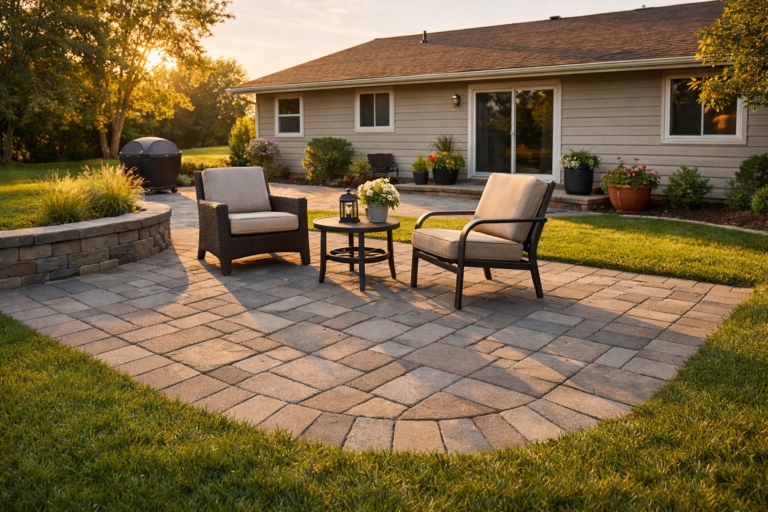
Stamped Concrete Patios in Schaumburg: Patterns, Costs, and What Holds Up
I get asked about stamped concrete more than almost anything else. Homeowners in Schaumburg see a stamped patio on their neighbor’s house and want the same look — but they also want to know if it’ll hold up. The short answer: yes, if it’s done right. The longer answer involves understanding what “done right” means in a climate that’s actively trying to destroy your concrete for six months of every year.
I’ve been installing stamped concrete across Schaumburg, Hoffman Estates, Palatine, and the surrounding area for 25 years. This guide covers what stamped concrete costs here in 2026, which patterns actually hold up in our freeze-thaw climate, and the maintenance nobody tells you about until after the pour.
What Stamped Concrete Costs in Schaumburg
For a standard 300 square foot patio (roughly 15×20 feet — the most common size I install on Schaumburg lots), stamped concrete runs $5,500–$10,000 installed in 2026. That’s $18–$28 per square foot, compared to $12–$18 for standard broom-finish concrete.
| Stamped Concrete Option | Cost per sq ft | 300 sq ft patio |
|---|---|---|
| Single pattern, one color + release | $18–$22 | $5,400–$6,600 |
| Single pattern, integral color + release | $20–$25 | $6,000–$7,500 |
| Complex pattern with accent staining | $24–$30 | $7,200–$9,000 |
| Multi-pattern with borders | $28–$35 | $8,400–$10,500 |
The price difference comes down to three things: pattern complexity (ashlar slate is simpler to stamp than European fan or cobblestone), the coloring method (powder release on gray concrete is cheapest; integral color with contrasting release and acid stain accents costs more), and whether you’re adding decorative borders or transitions between patterns.
Patterns That Work Best in Chicago’s Climate
Not every stamped pattern performs equally in the western suburbs. After 25 years of installing and maintaining stamped concrete, here’s what I recommend and what I steer homeowners away from.
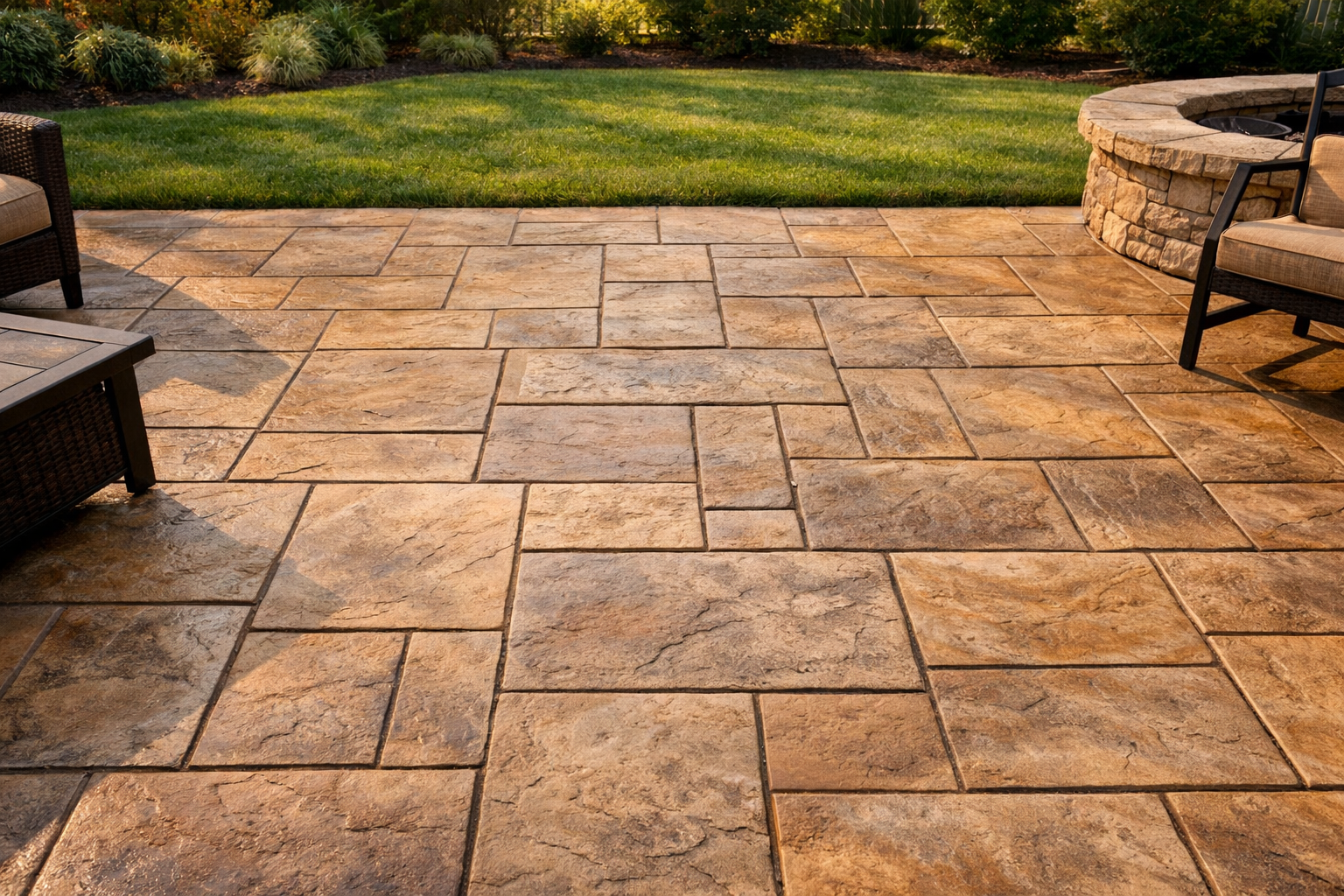
Best performers: Ashlar slate, random stone, and large flagstone patterns. These have wider, deeper grout lines that hide the natural cracking that happens over time in our climate. They also hold sealer well and the texture provides good traction when wet — important for a patio that’ll see rain and morning dew six months a year.
Good but higher maintenance: Wood plank patterns look fantastic but show wear at the edges of the “planks” faster than stone patterns. Cobblestone is beautiful but the tight, detailed pattern makes sealer application fussier and shows scuffing more easily.
Patterns I avoid in this climate: Anything with very fine, shallow detail. The freeze-thaw cycles wear down shallow texture over 5–8 years, and what started as a crisp pattern ends up looking like vaguely textured concrete. If a pattern relies on subtle surface detail rather than deep relief for its visual impact, it won’t age well here.
The Color Question
Color is where stamped concrete either looks like a custom outdoor room or a painted parking lot. There are two approaches, and I strongly recommend the more expensive one.
Powder release on gray concrete (cheaper): The base concrete is natural gray. A colored powder release agent is applied before stamping, which gives the recessed grout lines their color while leaving the surface lighter. This creates a two-tone effect that looks good initially but fades faster because the color is only on the surface. Over time, as the sealer wears and gets reapplied, the color contrast diminishes.
Integral color with release (recommended): Color pigment is mixed into the concrete itself, so the entire slab is colored all the way through. Then a contrasting release is applied for depth in the pattern. This costs $2–$4 more per square foot but the color lasts dramatically longer because you can’t wear through it — the color goes all the way to the bottom of the slab. Fifteen years from now, the integrally colored patio still looks like itself. The surface-only treatment looks washed out.
For Schaumburg homes, I typically recommend earth tones — tans, sandstone, slate gray, and terra cotta — that complement the brick and siding colors common on 1970s–1990s homes in the area. Avoid very dark colors (they get extremely hot in summer sun and show salt residue prominently in winter) and avoid pure white or very light colors (they show every stain and tire mark).
The Maintenance Nobody Mentions
Here’s the part that gets glossed over in sales pitches: stamped concrete requires regular sealing, and in Chicago’s climate, “regular” means every 2–3 years. Not optional. Not “if it looks like it needs it.” Every 2–3 years.
The sealer does three things: protects the color from UV fading, prevents water penetration that leads to freeze-thaw damage, and maintains the glossy or semi-glossy finish that makes the pattern pop. Without sealer, stamped concrete in the western suburbs starts losing its color definition within 3–4 years and becomes vulnerable to surface scaling.
Resealing a 300 square foot patio costs $200–$500 if you hire a professional, or $50–$100 in materials if you do it yourself (it’s a manageable DIY job). The surface needs to be clean, completely dry, and above 50°F — late spring and early fall are the ideal windows in the Chicago area.
Sealer types matter: I specify solvent-based acrylic sealers for stamped concrete in this area. Water-based sealers are easier to apply but don’t hold up as well through our winters. Solvent-based provides better freeze-thaw protection and a richer color enhancement. Apply in thin coats — heavy application causes peeling and white hazing, which is the most common stamped concrete complaint I get called to fix.
Stamped Concrete vs. Pavers in Schaumburg
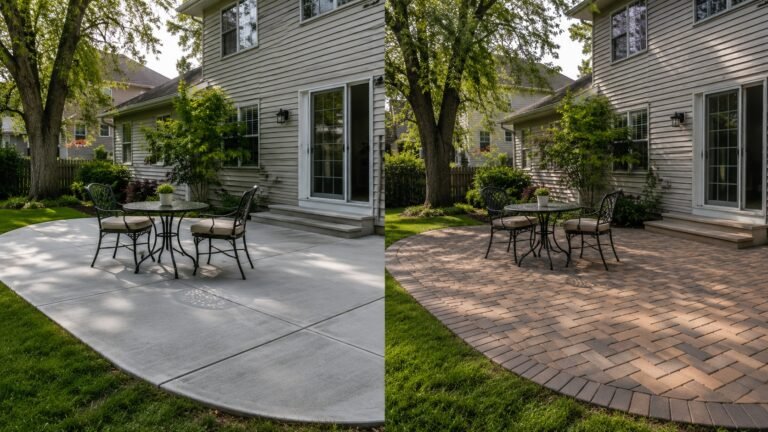
The most common comparison homeowners in Schaumburg ask about. Here’s the honest breakdown.
| Factor | Stamped Concrete | Pavers |
|---|---|---|
| Cost (300 sq ft) | $5,500–$10,000 | $6,000–$14,000 |
| Maintenance | Reseal every 2–3 yrs ($200–$500) | Polymeric sand every 3–5 yrs ($200–$400) |
| Repair | Difficult — patches visible | Easy — pull and reset individual pavers |
| Freeze-thaw durability | Good with air entrainment + sealer | Excellent — flexible joints |
| Lifespan | 20–25 years | 25–30+ years |
| Appearance | Seamless, flowing look | Individual unit character |
My honest take: if your budget allows pavers, they’re the better long-term choice for our climate because they handle ground movement without cracking. But stamped concrete at $18–$25/sq ft gives you a dramatic visual upgrade over plain concrete at roughly half the cost of premium pavers. For homeowners who want the look of stone without the paver price tag, it’s a legitimate choice — just go in knowing the sealing commitment.
Base Preparation — The Part You Can’t See
Stamped concrete fails for the same reason any concrete fails in the western suburbs: bad base preparation on clay soil. Schaumburg sits on the same glacial clay as the rest of DuPage and Cook County. Without proper excavation and aggregate base, the clay underneath expands, contracts, and heaves — taking your stamped patio with it.
Every stamped patio I install gets the same base treatment: excavate 10–12 inches of clay, install 6–8 inches of compacted CA-6 aggregate in 2-inch lifts, then pour minimum 4-inch concrete at 4,000 PSI with 6% air entrainment and fiber mesh reinforcement. This base work is 30–40% of the project cost, and it’s non-negotiable. A contractor who skips or shortcuts the base to hit a lower price point is giving you a patio with a 5–8 year lifespan instead of a 20–25 year lifespan.
Getting a Quote for Stamped Concrete
When comparing quotes from contractors in Schaumburg, make sure each estimate specifies the concrete PSI and air entrainment percentage, the base material type and depth, the stamp pattern and coloring method (integral vs. surface), the sealer type and number of initial coats, and whether the base preparation includes full clay excavation or just compaction of existing soil. That last point is the most common place where cheap bids cut corners.
Related guides: Patio Installation Costs in Addison, IL · Concrete & Driveway Services · Patio & Outdoor Living Services
If you’re considering a stamped concrete patio in Schaumburg or the surrounding suburbs, PHI3 Construction has been doing concrete work across the western suburbs for over 30 years. We’ll walk your yard, show you pattern and color samples, and give you an honest estimate. Request a free estimate — no pressure.
About Stan Kowalski — Stan is a concrete and flatwork specialist with 25 years of experience across Chicago’s western suburbs. He grew up on Chicago’s northwest side and started pouring concrete as a teenager. His articles focus on the technical details that determine whether your concrete lasts 10 years or 30.