
How to Choose a Remodeling Contractor in Elk Grove Village (Without Getting Burned)
I’ve been a remodeling contractor in Chicago’s western and northwestern suburbs for over 30 years, so I’m going to tell you something that might sound strange coming from someone in my position: hiring a contractor is the riskiest part of any home improvement project. Not the demolition, not the materials, not the design choices. The contractor. A good contractor turns your vision into reality. A bad one turns it into a nightmare that costs twice as much and takes three times as long.
Elk Grove Village has a lot of homes that are ripe for remodeling — mostly ranch-style and split-level homes built between the 1950s and 1980s — and that means there’s no shortage of contractors knocking on doors and posting on Nextdoor. This guide will help you sort the reliable professionals from the ones who’ll leave you with an unfinished kitchen and an empty bank account.
Start with the Basics: License, Insurance, and Registration
Before you evaluate anyone’s portfolio or compare bids, verify three things. These aren’t optional — they’re the minimum threshold a contractor must clear before you even have a conversation.
Illinois contractor registration. Illinois doesn’t have a statewide general contractor’s license, which surprises a lot of homeowners. But roofing contractors must be licensed through the Illinois Department of Financial and Professional Regulation (IDFPR), and all contractors doing work over $500 must register with the state. You can verify registration on the IDFPR website. Additionally, the Village of Elk Grove Village requires contractors to obtain a local business license. Ask for the license number and verify it with the village — it takes one phone call.
Insurance. Every contractor you consider must carry general liability insurance (minimum $1 million is standard) and workers’ compensation insurance covering their crew. Ask for a Certificate of Insurance and call the insurance carrier directly to verify it’s current — certificates can be forged or expired. If a contractor doesn’t carry workers’ comp and one of their workers is injured on your property, you could be liable. This isn’t hypothetical — I’ve seen it happen in Elk Grove Village.
Verify their physical presence. A legitimate contractor in the Elk Grove Village area should have a verifiable business address (not just a P.O. box), a working phone number that’s been active for more than six months, and a track record you can verify through online reviews, the Better Business Bureau, or references from past clients in the area. Fly-by-night operators — the ones who show up after storms or post too-good-to-be-true prices on Facebook Marketplace — don’t have any of this.
Red Flags That Should End the Conversation Immediately
After three decades in this industry, I can spot a problem contractor from the first phone call. Here are the red flags that should make you walk away — no exceptions.
“We can start tomorrow.” A good contractor in the western suburbs is booked 3–8 weeks out during the busy season (April through October). If someone can start tomorrow, it’s because nobody is hiring them — and there’s usually a reason.
They want a large deposit upfront. Industry standard for a deposit is 10–15% of the project total, or the cost of ordering materials. If a contractor is asking for 30%, 40%, or 50% upfront before any work begins, that money is funding their previous client’s unfinished project — or worse. I’ve seen Elk Grove Village homeowners lose $10,000–$20,000 to contractors who collected large deposits and disappeared.
No written contract or vague estimate. “We’ll figure out the details as we go” is not a project plan — it’s a blank check with your name on it. Every detail should be in writing before a single hammer swings: scope of work, materials specified by brand and model, timeline with milestones, payment schedule tied to completed work, warranty terms, and what happens if the project goes over budget or over schedule.
“You don’t need a permit for this.” If your project involves structural changes, electrical work, plumbing modifications, or anything beyond cosmetic updates, it almost certainly requires a permit from the Village of Elk Grove Village. A contractor who tells you to skip permits is either ignorant of the code or intentionally avoiding inspection of their work. Neither is acceptable.
They pressure you to decide immediately. “This price is only good today” is a sales tactic, not a legitimate business practice. Material prices don’t change daily, and a contractor who uses pressure tactics is counting on you not doing your homework. Take the time to get multiple estimates and compare them properly.
How to Compare Estimates the Right Way
Get at least three written estimates for your project. Not three phone quotes, not three ballpark numbers texted to you — three detailed written estimates from contractors who have physically walked your home and measured the space. Here’s how to evaluate them.
Compare scope, not just price. The cheapest estimate is often cheap because it’s leaving things out. One kitchen remodel estimate might include demolition, haul-away, new electrical, plumbing modifications, cabinets, countertops, flooring, backsplash, painting, and final cleanup. Another might include cabinets and countertops and leave everything else as “additional costs to be determined.” You can’t compare a $35,000 full-scope estimate to a $22,000 partial-scope estimate — they’re not bidding on the same project.
Check material specifications. “Quartz countertops” covers everything from $45/sq ft Silestone to $120/sq ft Cambria. “Semi-custom cabinets” could mean KraftMaid or it could mean a no-name import. Every major material in the estimate should have a brand, product line, color, and grade specified. If the estimate just says “quartz countertop — $4,500,” you have no idea what you’re getting.
Look at the payment schedule. A fair payment structure ties payments to completed milestones: 10–15% at contract signing, 25–30% at material delivery, 25–30% at rough-in completion, and the balance at final walkthrough and punch list completion. Never pay the full balance before the punch list is done — that final payment is your leverage to ensure every detail gets finished.
Verify the timeline. Ask each contractor for a realistic timeline broken into phases. A contractor who says “about six weeks” for a kitchen remodel isn’t giving you a timeline — they’re giving you a guess. A serious contractor can tell you: week 1 is demo, week 2 is rough-in and inspection, weeks 3–4 are drywall and cabinet install, week 5 is countertops and tile, week 6 is fixtures, appliances, and punch list. That level of detail tells you they’ve actually thought through your project.
What Elk Grove Village Homeowners Specifically Should Watch For
Elk Grove Village’s housing stock creates some specific issues that your contractor needs to understand.
The bulk of Elk Grove Village’s residential construction happened between 1955 and 1985. These homes frequently have aluminum wiring (common in late 1960s and early 1970s construction), which requires specific connection methods when new copper wiring is added. They may have cast iron drain stacks that are nearing end-of-life after 50+ years. Many have original windows with single-pane glass and deteriorating frames. And the older ranch homes often have original 100-amp electrical panels that can’t support modern kitchen and bathroom electrical loads.
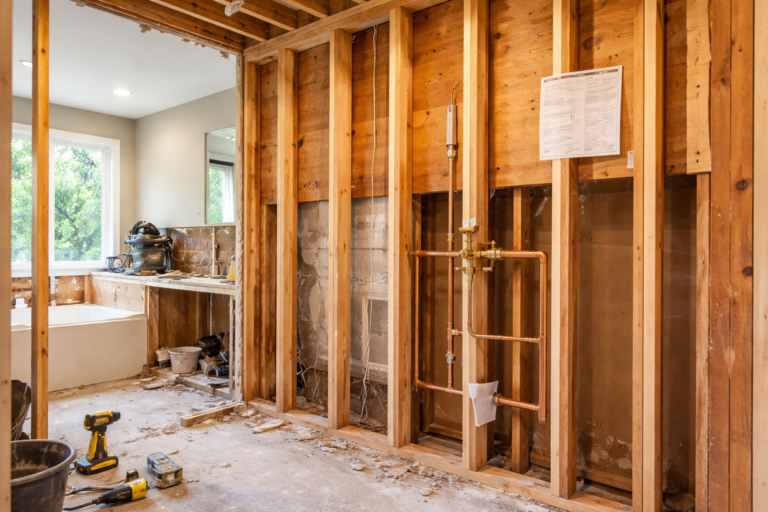
A contractor who’s experienced in the Elk Grove Village area knows to check for these issues during the estimate walkthrough — not after they’ve opened walls and your project is already underway. If your contractor doesn’t ask about the age of your electrical panel, plumbing, and HVAC during the initial visit, they’re either inexperienced or they’re planning to hit you with change orders later.
The Village of Elk Grove Village building department is professional and efficient. Permits are processed through the Community Development Department, and residential project permits typically take 5–10 business days for review. Your contractor should be familiar with the process and handle the permit application as part of their scope of work.
The Questions That Separate Good Contractors from Great Ones
Once you’ve verified licensing, insurance, and references, and you’re down to your top two or three candidates, here are the questions that reveal who’s actually going to deliver.
“Who will be on-site daily managing the project?” On large remodels, the person who sold you the job and the person who manages the daily work are often different people. You want to know who your day-to-day contact is, how often the project manager will be on-site, and how you’ll communicate about schedule changes or decisions that come up during the project.
“How do you handle change orders?” Every remodel in a 50-year-old Elk Grove Village home will have at least one surprise behind the walls. A good contractor has a clear change order process: they document the unexpected condition, present you with options and costs, get your written approval before proceeding, and adjust the timeline accordingly. If the answer is “we’ll figure it out,” that’s a red flag.
“Can I talk to your last three clients?” Not their best three — their last three. Any contractor can cherry-pick their happiest customers. Asking for the most recent projects gives you an unfiltered view of their current work quality and reliability. Call those references and ask: Did the project come in on budget? On time? How were problems handled? Would you hire them again?
“What’s your warranty?” A standard workmanship warranty for remodeling in the western suburbs is 1–2 years. Some contractors offer longer. More important than the length is the specifics: what’s covered, what’s excluded, how do you file a claim, and what’s the response time? Get it in writing.
The Contractor You Want to Hire
The best contractor for your Elk Grove Village remodeling project is someone who shows up on time for the estimate, asks detailed questions about your home and your goals, provides a thorough written estimate with specified materials and a realistic timeline, pulls permits without being asked, communicates proactively during the project, and stands behind their work after it’s done.
They probably won’t be the cheapest option. They won’t promise to start next week. And they won’t tell you what you want to hear just to get the deposit. But they’ll deliver a finished project that you’re proud of and that adds real value to your home.
If you’re looking for that kind of contractor in the Elk Grove Village area, PHI3 Construction has been serving homeowners across Chicago’s western and northwestern suburbs for over 30 years. We’re happy to walk your project, answer your questions, and provide a detailed estimate — with absolutely no pressure. Request a free estimate here.
Related Guides
Kitchen Remodel Cost in Schaumburg, IL — See what kitchen remodels actually cost in the western suburbs before you start getting estimates.
Building Permits for Bathroom Remodels in Arlington Heights — Understanding the permit process is key to evaluating whether your contractor does things right.
Driveway Replacement Cost in Addison, IL — A detailed cost breakdown for one of the most common exterior projects in the western suburbs.
About Mike Dalton — Mike is a veteran remodeling contractor with over 30 years of experience working across Chicago’s western and northwestern suburbs. He’s built, torn out, and rebuilt more kitchens, driveways, and patios across DuPage and Cook County than he can count. At HomeRemodelAdvice.com, Mike shares the practical, no-nonsense advice he wishes every homeowner had before starting a project. When he’s not on a job site, he’s probably arguing about the best concrete mix for Illinois freeze-thaw cycles.