Concrete Patio ROI in Naperville: What Homeowners Actually Recover at Resale
A backyard concrete patio is the kind of project homeowners often start thinking about in March and pour by July. The bigger question is whether that money is coming back when the house sells, or whether it is just buying a few summers of better living.
For most Naperville homeowners, the answer sits somewhere in the middle. A concrete patio rarely returns its full cost in sale price. It can, however, change how quickly a house sells and how competitive its listing looks against comparable homes. In a market like Naperville’s, where buyers shop hard and outdoor living is part of the standard expectation, that matters.
What ROI Looks Like in the Numbers
National data on patio ROI usually shows recovery in the 50 to 70 percent range at resale, depending on materials and how well the patio integrates with the rest of the yard. The Remodeling Impact Report from the National Association of Realtors tracks outdoor projects separately and consistently rates patios near the top for homeowner satisfaction, lower for direct financial return.
The disconnect is worth unpacking. A homeowner who lives with the patio for ten years before selling extracts most of the value through use, not resale. The financial return shows up in two indirect ways: faster days on market when the house lists, and fewer concessions in the negotiation when buyers see usable outdoor space.
Naperville buyers in particular tend to look for that space. The market profile skews toward families and households that entertain. A backyard with a finished patio reads as move-in ready. A backyard with a small concrete pad off the back door and grass beyond reads as a project the new owner will have to take on.
Naperville Patio Costs in 2026
Concrete patio pricing tracks fairly tightly with driveway pricing, with some variation for site access, drainage work, and any decorative finish. Typical 2026 ranges in Naperville:
- Small concrete patio, 10 x 12 (120 square feet): $1,800 to $2,800
- Standard size, 12 x 16 (192 square feet): $2,400 to $3,800
- Larger entertaining patio, 16 x 20 (320 square feet): $3,800 to $6,000
- Wraparound or multi-level concrete patio, 400-plus square feet: $5,500 to $12,000+
- Stamped concrete upgrade: add $5 to $9 per square foot
- Exposed aggregate finish: add $3 to $6 per square foot
Those numbers assume four-inch slabs on compacted base with control joints, integral pour, and basic site prep. Sloped lots, tight access, and significant drainage work can add meaningfully.
What Buyers in Naperville Notice
Real estate professionals working Naperville neighborhoods point to a few patterns when patios come up in buyer conversations:
Size relative to the home. A 10 x 10 patio behind a 3,800-square-foot home reads as undersized. Buyers picture entertaining, family meals, and outdoor space for kids. They want patio square footage to feel proportional to the house.
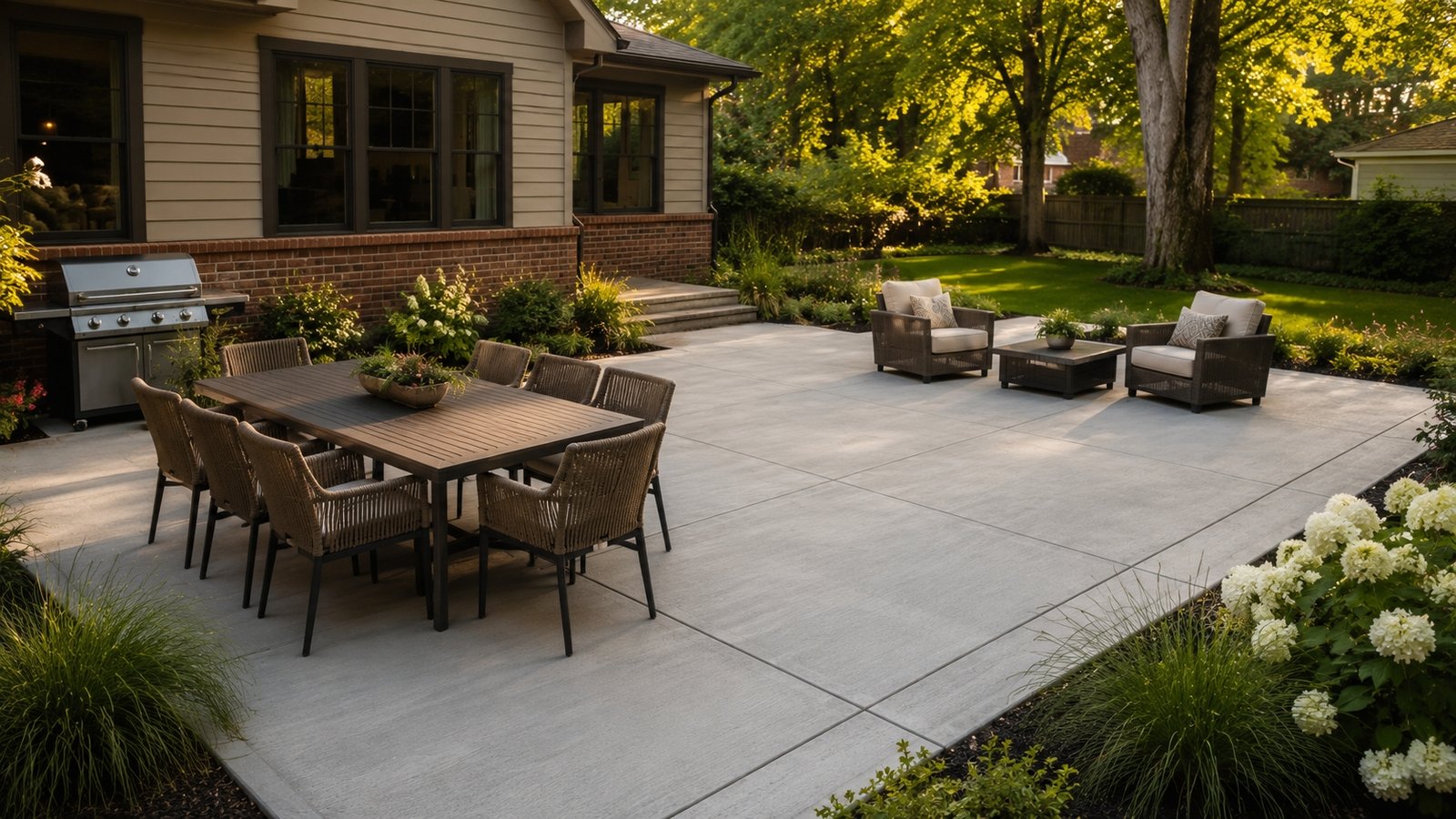
Integration with the yard. A patio that floats in the middle of a lawn looks like an afterthought. A patio that connects to the house with logical traffic flow, has landscaping framing it, and feels like a destination tends to photograph better and show better.
Material consistency. A concrete patio paired with a wood deck of a different era often looks disjointed. A patio that complements the home’s existing exterior materials reads as planned.
Shade and weather. Naperville summers run warm. A patio with no shade strategy, whether from a pergola, a tree, or the house’s own roofline, is less appealing. Buyers notice usability, not just square footage.
How Material Choice Affects Value
Concrete is one of three common options for a Naperville patio. The trade-offs:
Standard broom-finished concrete. Lowest cost, longest expected service life with proper installation, and the most flexible from a design standpoint. Reads as practical rather than premium.
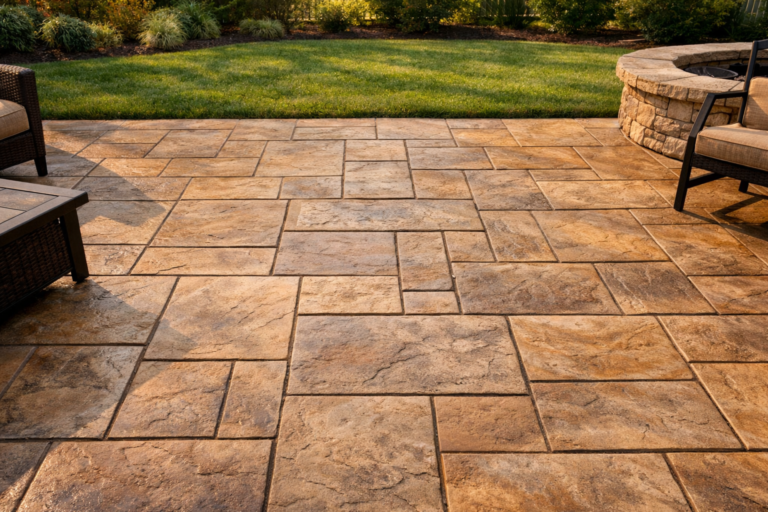
Stamped or decorative concrete. Adds 40 to 70 percent to the base cost depending on pattern and color. Looks closer to a paver patio at a fraction of the installed price. Resale appeal tends to lift when stamped concrete is done well; it tends to date the patio when done poorly.
Pavers. Higher installed cost than plain concrete, often comparable to high-end stamped. Visual appeal scores highly with buyers. Long-term maintenance involves polymeric sand and occasional re-leveling. A more detailed look at paver and concrete patio options in nearby Addison covers the broader material picture.
For Naperville homes in the $600,000 to $1.2 million range, stamped concrete or pavers tend to land closer to neighborhood expectations than plain concrete. Below that range, plain concrete is often the right answer financially.
Site Realities That Affect Cost and Value
A few Naperville-specific factors show up regularly:
Clay soil and drainage. Naperville sits on the same heavy clay that runs through DuPage County. Patios need positive drainage away from the house, typically a quarter-inch per foot of slope. Patios that drain toward the foundation cause expensive problems years later, regardless of how the patio itself looks.
Tree root proximity. Mature trees in established neighborhoods, especially near the older sections of Naperville, can complicate patio layout. Pouring near significant roots damages the tree and risks future patio heaving.
Freeze-thaw durability. Concrete patios in northern Illinois face the same freeze-thaw stress as driveways. Air entrainment in the mix is standard. Sealing in the first fall after pour, and roughly every two to three years afterward, extends surface life significantly.
Permits. The City of Naperville generally does not require a permit for at-grade concrete patios that do not connect to a structure or change drainage on the property. Elevated patios, those connecting to a deck, and those exceeding certain footprints may require permits. The Naperville permits and licenses department maintains current requirements.
When a Patio Project Pays Off (and When It Does Not)
The financial logic for Naperville homeowners considering a concrete patio breaks down roughly like this:
Likely to pay off:
- Home is being prepared for sale in the next 12 to 24 months, and the backyard currently lacks usable outdoor space
- Homeowners plan to stay five-plus years and will use the patio frequently
- The yard has the size and layout to support a proportional patio
- The patio is part of a broader outdoor plan that includes landscaping and lighting
Less likely to pay off:
- The existing patio is functional but the homeowner wants something newer
- The lot is small or oddly configured, limiting patio size
- The patio would not connect logically to the home or the rest of the yard
- The home is at the top of its neighborhood comp range already, leaving limited upside
The strongest patio investments in Naperville tend to be additions where none existed before, in homes that previously had no usable outdoor entertaining space. The weakest are oversized replacements of patios that were merely tired-looking but still functional.
How Patios Stack Up Against Other Outdoor Improvements
Naperville homeowners weighing a patio against other backyard projects can use this rough hierarchy of resale impact:
- Adding outdoor space where none existed typically returns the highest percentage of cost, even when the absolute return is modest.
- Upgrading a tired patio to a properly sized, well-integrated one comes in next, especially when paired with landscape improvements.
- Replacing a functional patio with a higher-end material returns the smallest percentage of cost, because the home already had usable outdoor space.
A new driveway, by comparison, has different dynamics. Driveways are universally visible and universally evaluated by buyers, while patios depend more on the backyard layout being attractive overall. The home value impact of a new concrete driveway follows different rules than patio ROI does.
Frequently Asked Questions
How long does a concrete patio last in Naperville?
A properly installed concrete patio with adequate base, correct mix, and regular sealing should last 25 to 30 years. Patios with shortcuts in installation often show significant surface deterioration within 8 to 12 years.
Does adding a patio increase property tax assessments?
A new at-grade concrete patio rarely triggers a meaningful property tax reassessment in DuPage County. Larger projects that involve permits, structural elements, or significant footprint changes can prompt review.
Stamped concrete or pavers for a patio in Naperville?
Stamped concrete is typically 25 to 40 percent less expensive installed than comparable pavers, holds up well in freeze-thaw cycles, and offers strong visual appeal when patterns and colors are chosen carefully. Pavers offer easier individual repair, slightly higher resale appeal in higher-end neighborhoods, and require periodic re-leveling. A direct comparison of stamped versus plain concrete and how each affects value covers the decision in more detail.
Should the patio be poured before or after landscaping?
Patio first, then landscaping. Heavy equipment access for the pour will damage finished landscaping. Plan irrigation routing around the planned patio footprint before pouring.
What size patio should a Naperville homeowner plan?
A useful rule of thumb is 180 to 250 square feet for a basic entertaining space (small dining table plus a few chairs), 300 to 400 square feet for an entertaining setup with separate dining and lounge zones, and 500-plus square feet for larger gatherings or multi-functional outdoor space. Bigger is not always better; oversized patios in modest yards often look out of scale.
What time of year is best to pour a patio in Naperville?
Mid-May through June and mid-September through October offer the most forgiving curing conditions. Mid-summer pours work but require closer attention to curing, especially on south-facing slabs that get full sun.
The Bottom Line on Patio ROI in Naperville
Most Naperville homeowners do not recover the full installed cost of a concrete patio in sale price. What they often gain is something more useful: faster sale times and fewer concessions at the negotiating table. Patios are best treated as projects that pay back in years of use, with resale appeal as a secondary benefit.
For homeowners weighing patio size, material, or layout against budget, getting quotes from multiple contractors clarifies the trade-offs fast. The publication’s free estimate request form connects readers with a vetted local contractor. For the broader picture on outdoor living projects, the Patio and Outdoor Living services overview covers options across materials and configurations. The stamped concrete patio coverage for Schaumburg goes deeper on patterns, costs, and durability specifics for homeowners considering decorative finishes.