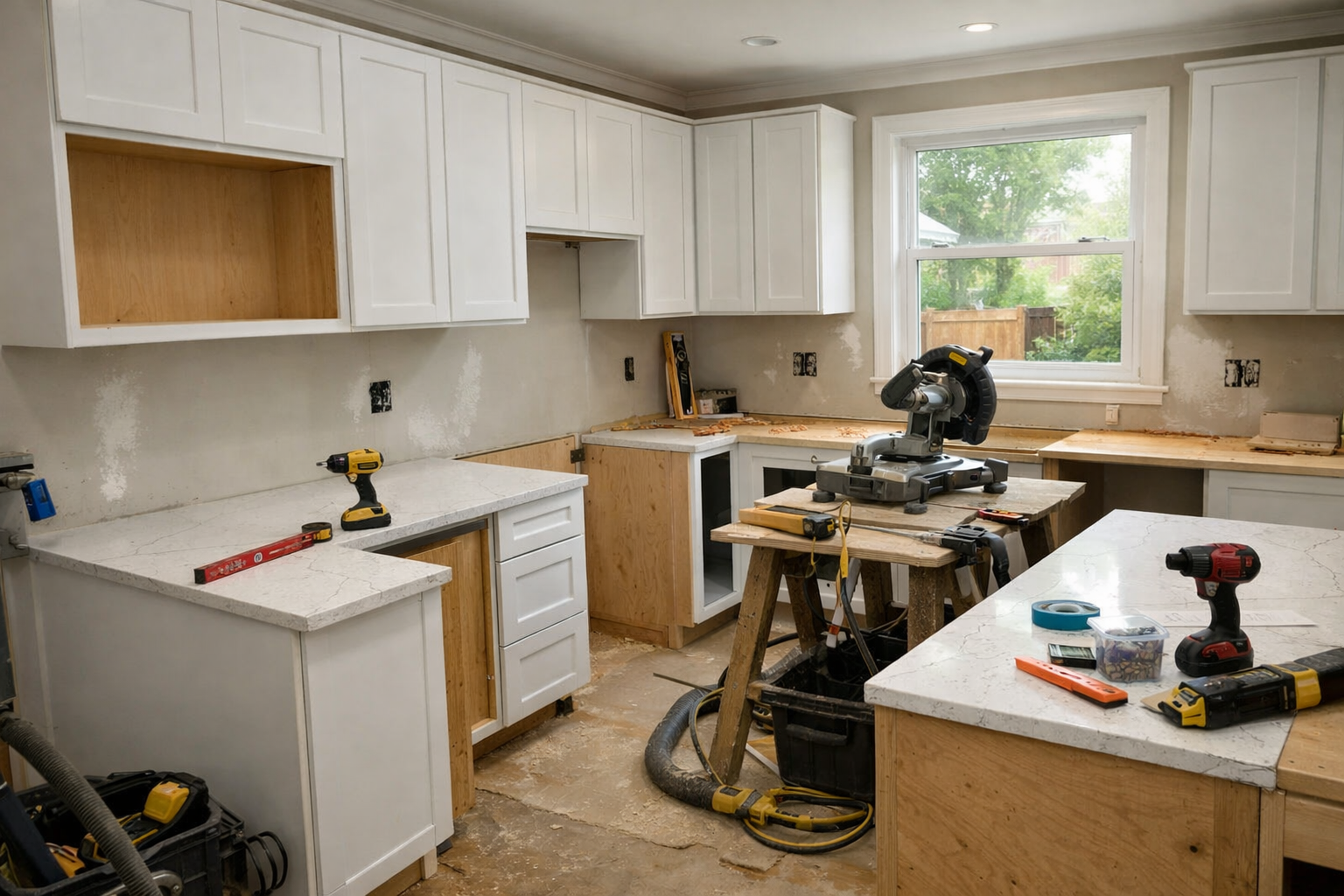
Kitchen Remodel Cost in Schaumburg, IL: What to Expect in 2026
If you own a home in Schaumburg and you’re thinking about remodeling your kitchen, the first question is always the same: how much is this actually going to cost me? I’ve been doing remodeling work across Chicago’s western suburbs for over 30 years, and I can tell you that the national averages you’ll find on sites like HomeAdvisor or Angi are next to useless for pricing a Schaumburg kitchen. The costs here are shaped by factors those sites don’t account for — the age and construction style of your home, local permit fees, material delivery logistics, and the reality that skilled tradespeople in the Chicago metro aren’t charging Alabama prices.
This guide gives you real numbers based on what kitchens actually cost in Schaumburg and the surrounding western suburbs in 2026. No fluff, no bait-and-switch ranges. Just honest pricing so you can plan your budget before you ever pick up the phone.
What Schaumburg’s Housing Stock Means for Your Kitchen Budget
Schaumburg’s residential development boomed between the late 1960s and early 1990s. That means the majority of kitchens I work on here are in split-level homes, bi-levels, and ranch-style houses that are 35 to 55 years old. These homes were built with galley-style or L-shaped kitchens that felt perfectly fine in 1975 but don’t match how families use kitchens today.
This matters for your budget because older homes come with older problems. You’re likely looking at outdated electrical panels that can’t support modern appliance loads, galvanized or copper plumbing that may need replacement once you open walls, and potentially asbestos in floor tiles or pipe insulation if the home was built before 1980. None of these are deal-breakers, but they add cost that a homeowner in a 2015-built house simply doesn’t face.
The typical Schaumburg kitchen is between 100 and 180 square feet. If you’re keeping the existing footprint, your costs stay more predictable. Once you start knocking out walls to create an open-concept layout — which is the single most requested change I see in these older split-levels — the budget goes up significantly because you’re dealing with structural engineering, load-bearing wall modifications, and often relocating plumbing and electrical runs.
Kitchen Remodel Cost Ranges for Schaumburg in 2026
Here’s what you should realistically budget based on the scope of your project. These numbers reflect actual project costs in Schaumburg, Hoffman Estates, Roselle, and the surrounding area — not theoretical national data.
Cosmetic Refresh: $12,000–$22,000
This is the lightest touch — you’re keeping the existing layout, cabinets stay in place, and no walls move. A cosmetic refresh typically includes cabinet refacing or painting ($3,500–$7,000), new countertops ($2,500–$6,000 for quartz, $1,800–$3,500 for laminate), updated backsplash ($1,200–$3,000), new lighting fixtures ($800–$2,500), fresh paint, and possibly new hardware. You might swap out the faucet and sink but leave the plumbing where it is.
This level of work doesn’t usually require a building permit in Schaumburg unless you’re doing electrical work beyond simple fixture swaps. It’s a good option if your cabinets are structurally sound and you’re mainly fighting dated finishes — think oak cabinets, Formica counters, and fluorescent box lighting from the 1990s.
Mid-Range Remodel: $28,000–$55,000
This is where most Schaumburg homeowners land. A mid-range remodel means new cabinets (semi-custom, typically $8,000–$18,000 installed), quartz or granite countertops ($4,000–$8,000), new flooring ($2,500–$5,000 for LVP or tile), updated plumbing fixtures, a new sink, upgraded lighting including undercabinet LEDs, new appliances ($3,000–$8,000 for a mid-range package), and a proper tile backsplash.
At this level, you’re likely pulling a permit from the Village of Schaumburg Building and Regulatory Services. Permit fees for a kitchen remodel in Schaumburg run between $150 and $500 depending on the scope, and inspections are required for any new electrical circuits, plumbing relocations, or structural changes. Plan for the permit process to add 2–4 weeks to your timeline — the village is generally efficient, but scheduling inspections requires some patience.
Labor costs in the western suburbs run $65–$95 per hour for skilled tradespeople in 2026. A mid-range kitchen remodel typically involves 150–300 labor hours across demolition, rough-in trades (electrical, plumbing), carpentry, tile work, and finish installation. That’s $10,000–$25,000 in labor alone, which is why the labor component often surprises homeowners who’ve been pricing cabinets and countertops online.
High-End Remodel: $55,000–$85,000+
A high-end kitchen in Schaumburg typically involves custom or semi-custom cabinetry ($15,000–$30,000), premium countertops like quartzite or marble ($6,000–$12,000), professional-grade appliances ($8,000–$20,000+), custom lighting design, structural changes like removing a wall to open to the dining or living area, and high-end finishes throughout. If you’re adding an island with plumbing and electrical — which requires running lines through or under the slab in many Schaumburg homes — expect that single element to add $5,000–$12,000 to the project.
At this tier, the project often expands beyond just the kitchen. I regularly see high-end Schaumburg remodels that include new flooring extending into adjacent rooms, upgraded electrical panels to handle the added load, and sometimes even HVAC modifications to properly heat and cool a newly opened floor plan.
The Hidden Costs That Catch Schaumburg Homeowners Off Guard
Every kitchen remodel in a 40-year-old Schaumburg home has surprises. Budgeting a 10–15% contingency isn’t pessimistic — it’s realistic. Here are the most common unexpected costs I see in this area.
Electrical panel upgrades: Many Schaumburg homes built in the 1970s have 100-amp electrical panels. A modern kitchen with a dishwasher, garbage disposal, microwave, range hood, undercabinet lighting, and possibly an induction cooktop can easily overwhelm that capacity. Upgrading to a 200-amp panel runs $1,800–$3,500 in this area, and it’s not optional — the village inspector will flag it.
Plumbing surprises: Once you open walls in a 1970s or 1980s home, you may find galvanized steel supply lines that are partially corroded, or cast iron drain lines that are nearing end of life. Replacing supply lines while walls are open adds $1,500–$4,000 but saves you from a far more expensive emergency repair down the road.
Asbestos abatement: Vinyl floor tiles and their adhesive from the 1960s and 1970s frequently contain asbestos. If your Schaumburg home has that original 9×9-inch floor tile, it almost certainly does. Professional abatement runs $1,500–$4,000 for a kitchen-sized area. You cannot legally remove it yourself, and no reputable contractor will install over it without proper encapsulation or removal.
Subfloor damage: Dishwasher and sink leaks that went unnoticed for years can rot the subfloor. Replacing damaged subfloor sections costs $500–$2,000 depending on extent, and you won’t know until the old flooring comes up.
Structural engineering for wall removal: If you’re opening up a load-bearing wall between the kitchen and living area — extremely common in Schaumburg split-levels — you’ll need a structural engineer to design the beam and support system. Engineering fees run $500–$1,500, and the beam installation itself adds $2,000–$6,000 depending on span and material.
How Long Does a Kitchen Remodel Take in Schaumburg?
Timeline is the second thing every homeowner asks about, right after cost. Here are realistic timelines for Schaumburg kitchen projects in 2026.
A cosmetic refresh with no permit work takes 2–3 weeks. A mid-range remodel runs 6–10 weeks from demolition to final walkthrough, assuming permits are pulled in advance. A high-end remodel with structural changes typically takes 10–16 weeks. Custom cabinetry adds 6–10 weeks of lead time before work even begins — you’re ordering those months before your demo date.
One Schaumburg-specific timing note: if your project requires a structural permit, the Village’s plan review process typically takes 2–3 weeks. Factor that into your planning, especially if you’re trying to wrap up before the holidays or before school starts.
What Actually Drives Kitchen Remodel Costs Up (and Down)
After three decades of doing this work, I can tell you the biggest cost drivers aren’t what most homeowners expect.
Layout changes are the #1 cost multiplier. Moving the sink, relocating the stove, or adding an island where plumbing and electrical need to run through a concrete slab — these changes cascade into permit requirements, trade coordination, and time. If you can keep your major fixtures in their current locations, you’ll save 15–25% on the overall project.
Cabinetry is the largest single line item. It typically represents 30–40% of a mid-range kitchen remodel budget. The spread between stock cabinets from a big box store ($5,000–$10,000 for a typical Schaumburg kitchen) and semi-custom or custom cabinetry ($12,000–$30,000) is enormous. Stock cabinets have gotten significantly better in quality over the past decade, and for many homeowners, they’re a smart choice that frees up budget for better countertops or appliances.
Appliance packages vary wildly. A solid mid-range package (stainless steel refrigerator, range, dishwasher, microwave) runs $3,000–$6,000. Step up to a professional-grade package with a 36-inch range, built-in refrigerator, and panel-ready dishwasher, and you’re at $12,000–$25,000. The appliances don’t change the labor cost much — they just change the material line item dramatically.
Countertop material matters less than you think. The installed cost difference between mid-grade quartz and premium granite is often only $1,500–$3,000 for a typical kitchen. Where homeowners blow the budget is on exotic materials like quartzite or marble with complex edge profiles and multiple seams — that’s where a $4,000 countertop becomes a $10,000 countertop.
Permits and Inspections in Schaumburg
The Village of Schaumburg requires building permits for any kitchen remodel that involves structural changes, new electrical circuits, plumbing modifications, or HVAC work. Cosmetic-only work (painting, cabinet refacing, countertop replacement with no plumbing changes) typically doesn’t require a permit, but it’s always worth confirming with the Building and Regulatory Services department at Village Hall.
Permit applications can be submitted online through the Village of Schaumburg’s portal. You’ll need to provide a scope of work description and, for structural changes, engineered drawings. Your contractor should handle this — if they tell you permits aren’t needed for work that clearly involves electrical or plumbing, that’s a red flag.
Inspections happen at rough-in (after framing, electrical, and plumbing are installed but before walls are closed) and at final completion. The village inspectors in Schaumburg are thorough but reasonable — they’re making sure the work is safe, not looking for reasons to fail you.
How to Budget Your Schaumburg Kitchen Remodel
Here’s the approach I recommend to every homeowner in Schaumburg who’s planning a kitchen remodel.
First, decide your hard budget ceiling — not a range, a number. “We’re not going above $45,000” is a useful constraint. “Somewhere between $30,000 and $60,000” is not. Second, get at least three detailed written estimates from licensed contractors who work in your area. Not ballpark numbers over the phone — actual itemized estimates after they’ve walked your kitchen. Third, add 15% to whatever your contractor quotes for contingency. In a home built before 1985, you will hit something unexpected behind those walls. Fourth, sequence your spending decisions from most to least impactful: layout first, then cabinets, then countertops, then appliances, then finishes. This order reflects where the budget makes the biggest visible and functional difference.
One more thing: the cheapest kitchen remodel is never the best value. A contractor who bids 30% below everyone else is either cutting corners on materials, using unlicensed subcontractors, or planning to make it up in change orders. In 30+ years of doing this work across the western suburbs, I’ve never seen a lowball bid end well for the homeowner.
Is a Kitchen Remodel Worth It in Schaumburg?
Schaumburg’s median home value sits around $310,000–$340,000 as of early 2026. A mid-range kitchen remodel in this market typically recoups 60–75% of its cost at resale, according to regional data from the National Association of Realtors. But the real return isn’t just financial — it’s the daily quality-of-life improvement of cooking, eating, and gathering in a space that actually works for your family.
If you’re planning to stay in your Schaumburg home for five or more years, a well-executed kitchen remodel is one of the most rewarding investments you can make. If you’re planning to sell within a year or two, focus on the cosmetic refresh level — it delivers the highest ROI per dollar spent.
Ready to Plan Your Kitchen Remodel?
A kitchen remodel is a big investment, and the most important decision you’ll make isn’t which countertop to choose — it’s which contractor to trust with your home. Look for a contractor who is licensed and insured in Illinois, has verifiable experience with kitchen remodels in Schaumburg and the surrounding suburbs, pulls permits properly, and provides a detailed written estimate — not a ballpark. If you’d like a free, no-pressure estimate for your Schaumburg kitchen project, PHI3 Construction has been serving Chicago’s western suburbs for over 30 years. Request a free estimate here.
Related Guides
Driveway Replacement Cost in Addison, IL — Real local pricing for another major exterior project in the western suburbs.
Building Permits for Bathroom Remodels in Arlington Heights — A closer look at the permit process for another common remodeling project.
How to Choose a Remodeling Contractor — Licensing, red flags, and the right questions to ask before signing a contract.
About Mike Dalton — Mike is a veteran remodeling contractor with over 30 years of experience working across Chicago’s western and northwestern suburbs. He’s built, torn out, and rebuilt more kitchens, driveways, and patios across DuPage and Cook County than he can count. At HomeRemodelAdvice.com, Mike shares the practical, no-nonsense advice he wishes every homeowner had before starting a project. When he’s not on a job site, he’s probably arguing about the best concrete mix for Illinois freeze-thaw cycles.