Concrete Patio vs. Paver Patio in Elmhurst: Cost, Durability, and Maintenance Compared
Elmhurst homeowners planning a backyard patio eventually land on the same fork in the road: poured concrete or interlocking pavers. Both can look great. Both handle Chicago weather. And both come with trade-offs that are easy to overlook in a showroom or on a contractor’s website.
The right choice depends on the budget, the look you want, how much maintenance you are willing to do over the next 15 to 20 years, and what matters to buyers if you sell. Here is how the two options compare in real terms for a typical Elmhurst backyard.
Upfront Cost: Concrete Wins on Price
For a standard patio in the 300-to-500-square-foot range (a common size for Elmhurst’s older ranch and split-level lots), here is what 2026 pricing looks like in the western suburbs:
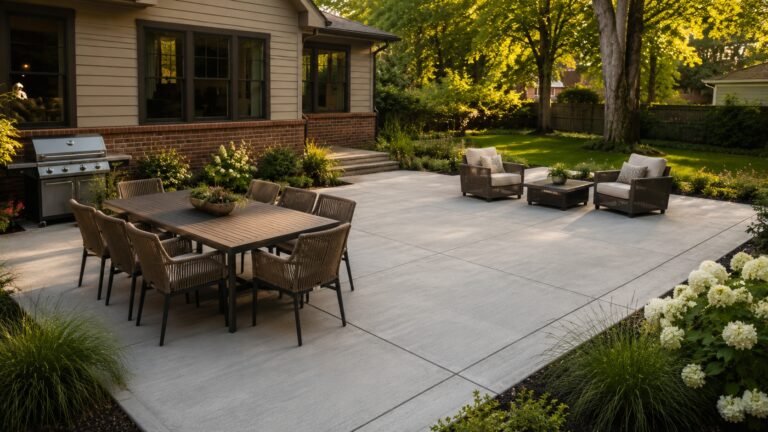
Poured concrete (broom finish): $8 to $14 per square foot installed. A 400-square-foot patio runs roughly $3,200 to $5,600.
Poured concrete (stamped or colored): $14 to $22 per square foot installed. The same 400-square-foot patio runs $5,600 to $8,800. (For a deeper look at stamped concrete pricing, see stamped concrete patio costs in Schaumburg.)
Interlocking pavers (concrete pavers, standard patterns): $18 to $30 per square foot installed. That 400-square-foot patio comes in at $7,200 to $12,000.
Interlocking pavers (premium natural stone or large-format porcelain): $28 to $45+ per square foot. The same area runs $11,200 to $18,000 or more.
The gap is significant. A basic concrete patio costs roughly 40 to 60 percent less than a comparable paver patio. Even stamped concrete, which mimics the look of pavers or natural stone, typically comes in under the price of actual pavers. For homeowners on a fixed budget, concrete delivers more usable patio square footage per dollar.
Installation: What Goes Underneath Matters More Than What Goes on Top
Both options require a proper base, and in Elmhurst’s clay-heavy soil, that base work is not optional. Skipping it or skimping on it is the single most common reason patios fail in the Chicago suburbs, regardless of surface material.
A concrete patio needs four to six inches of compacted granular base (typically CA-6 crushed limestone), a vapor barrier in some situations, and properly placed control joints to manage cracking. The pour itself takes a day for most residential patios, plus seven days of cure time before furniture goes on it.
A paver patio needs the same compacted gravel base (sometimes deeper, up to eight inches for vehicular-rated applications), plus a one-inch layer of bedding sand, the pavers themselves, edge restraints to prevent spreading, and polymeric sand swept into the joints to lock everything together. Installation takes two to four days for a 400-square-foot patio, but there is no cure time. You can use it the same evening.
The base preparation cost is similar for both. The difference in final price comes from material cost and labor intensity: setting individual pavers by hand takes longer than pouring and finishing a slab.
Freeze-Thaw Performance
This is where Elmhurst’s climate makes the comparison more interesting than it would be in a milder region.
Concrete slabs are rigid. When the ground underneath moves (and it will, every spring, in DuPage County’s expansive clay), the slab has to absorb that movement. Control joints help by giving the concrete predetermined lines to crack along, but some cracking beyond the joints is normal over time. A well-poured slab on a good base handles freeze-thaw cycles for 25 to 30 years before the accumulated damage becomes more than cosmetic.
Pavers are flexible. Each individual unit can shift slightly without cracking, and the sand-filled joints act as tiny expansion gaps across the entire surface. This makes a paver patio more forgiving of minor ground movement. When a single paver does crack or settle, it can be pulled out and replaced without affecting the rest of the patio.
In practice, both perform well in the Chicago suburbs when installed correctly. The difference shows up over time: concrete develops character (cracks, patina, minor spalling) that some homeowners accept and others find unacceptable. Pavers shift and settle in ways that may require releveling every 8 to 12 years, but individual units stay intact longer.
Maintenance Over 20 Years
Maintenance is where homeowners who chose based on price alone sometimes regret the decision, in either direction.
Concrete maintenance: Relatively low. Seal the surface every two to three years ($0.50 to $1.50 per square foot for a contractor, or a DIY weekend project for under $100 in materials). Clean with a pressure washer once a year. Fill any cracks that develop with a concrete caulk or polyurethane filler. The biggest ongoing cost is resealing, especially for stamped or colored concrete, where the sealer protects the decorative finish.
Paver maintenance: Moderate. The pavers themselves need almost nothing, but the joints do. Polymeric sand washes out over time, especially in heavy rain or with aggressive pressure washing, and needs to be topped off every two to four years ($200 to $500 for a contractor, or a half-day DIY project). Weeds and ants find their way into joints where the sand has eroded. Edge restraints occasionally shift and need resetting. Every 8 to 12 years, a full relevel may be needed, where a contractor pulls up settled sections, adds base material, re-compacts, and relays the pavers. This can run $3 to $6 per square foot for the affected area.
Over a 20-year window, the total maintenance cost for concrete and pavers tends to converge. Concrete costs less per maintenance event but needs consistent resealing. Pavers cost more per event (especially releveling) but the intervals are longer. Budget roughly $1,500 to $3,000 in total maintenance costs over 20 years for either option on a 400-square-foot patio.
Repair and Replacement
Here is where pavers have a clear structural advantage.
If a section of a concrete patio cracks badly, settles, or gets stained beyond cleaning, the fix usually means cutting out the damaged section and pouring a patch. The patch will never perfectly match the original in color or texture, and the seams where new meets old are visible. For stamped concrete, matching a patch to the existing pattern and color is extremely difficult. Some homeowners accept the mismatch; others end up replacing the entire patio sooner than they planned.
If a paver shifts, cracks, or stains, you pull that one paver out and drop in a new one. Matching is easier because manufacturers keep standard lines in production for years, and even a slightly different shade blends into the overall pattern. Releveling a settled section means pulling up the affected pavers (they are not glued down), fixing the base, and relaying the same units. No waste, no color mismatch, no structural compromise.
This repairability is the strongest practical argument for pavers on a long time horizon. It is also why the Interlocking Concrete Pavement Institute (ICPI) positions pavers as a lifecycle-cost competitor to poured concrete despite the higher upfront price.
Appearance and Design Flexibility
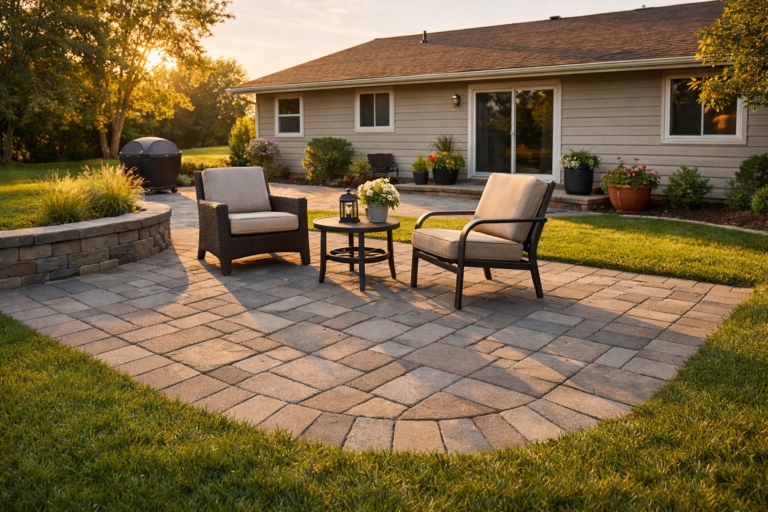
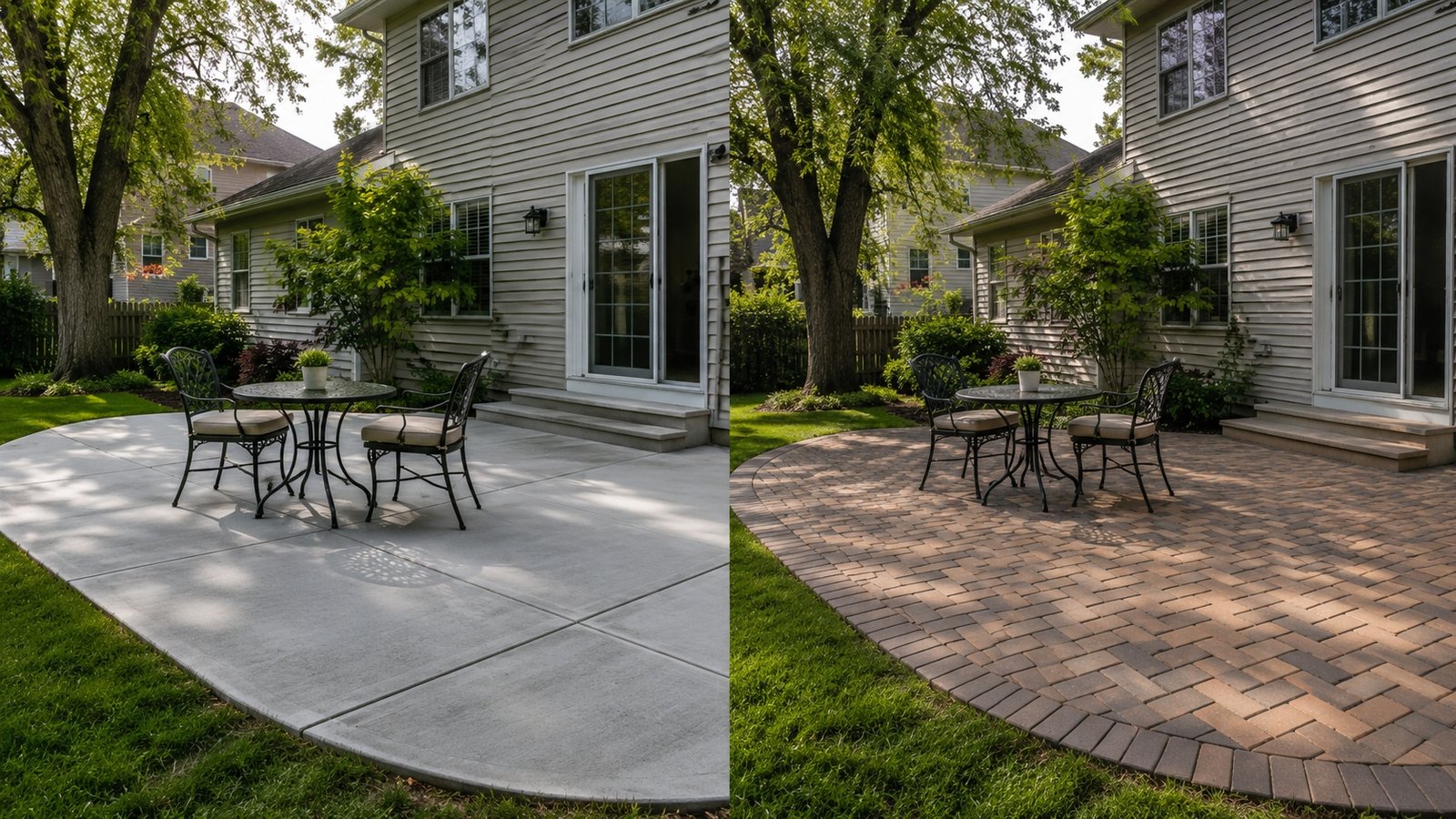
Pavers offer more design range out of the box. Herringbone, running bond, basketweave, circular patterns, mixed colors, border accents, natural stone textures. The design vocabulary is broader, and changes to the layout are possible during installation without starting over.
Concrete offers a cleaner, more modern look in its basic broom-finish or exposed-aggregate forms. Stamped concrete can mimic pavers, flagstone, or brick, but the result is a single continuous surface rather than individual units. Some homeowners prefer this seamless look; others find that stamped patterns read as imitation rather than the real thing, especially up close.
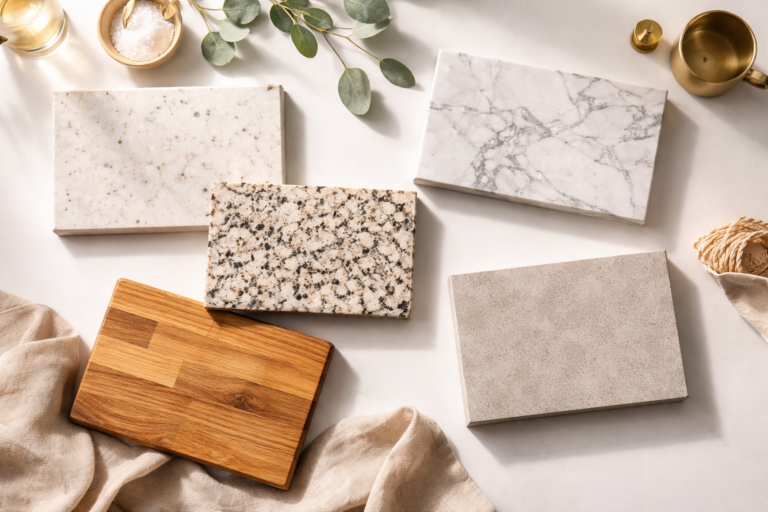
Color is another differentiator. Integral color in concrete is mixed into the slab and is permanent, but the options are limited compared to the range of paver colors and blends available. Staining or dyeing concrete after the pour opens up more options but adds cost and requires periodic reapplication.
For Elmhurst homes with traditional or craftsman architecture (common in the neighborhoods closer to downtown and the historic district), pavers in earth tones or tumbled finishes tend to complement the home’s character. For mid-century ranches and contemporary builds, clean-lined concrete often fits better. Neither choice is wrong; the right one depends on what the patio needs to do visually for that specific home.
Resale Value
Buyers in DuPage County notice outdoor living spaces more than they did a decade ago. A well-maintained patio of either material adds usable square footage to the home and signals that the property has been cared for.
That said, paver patios tend to photograph better in listings and are perceived as a premium feature by most buyers. Concrete patios, especially plain broom-finish, are seen as functional but not a selling point. Stamped concrete falls somewhere in between.
For a deeper look at how concrete outdoor improvements affect what buyers are willing to pay, see concrete patio ROI in Naperville and the stamped vs. plain concrete comparison for Wheaton homeowners.
Neither material delivers a full dollar-for-dollar return at resale. The national average ROI for a patio project hovers around 50 to 70 percent of installed cost, regardless of material. The value is in making the home competitive with other listings that have outdoor living spaces, not in expecting to recoup the full investment.
Which One for Your Elmhurst Home?
Choose concrete if: Budget is the primary driver. You want a clean, low-fuss surface. You are comfortable with the possibility of cracks developing over time. The patio is a practical addition (grill pad, table space) rather than a design centerpiece.
Choose pavers if: You want maximum design flexibility. Long-term repairability matters to you. You are willing to spend more upfront for a surface that ages differently. The patio is a visible part of the home’s presentation (close to the house, visible from inside, used for entertaining).
Consider stamped concrete if: You like the look of pavers but not the price. You want a single-pour surface without individual units to maintain. You accept that repairs will be harder to match down the road.
There is no universally right answer. The best patio is the one that fits the home, the budget, and the homeowner’s willingness to maintain it over time. For a broader look at patio material options and local pricing, see patio installation costs and materials in Addison and the patio and outdoor living services overview.
If you are narrowing down the options and want real numbers for your specific yard, request a free estimate from a vetted local contractor to compare quotes side by side.