Stamped vs Plain Concrete for Wheaton Homeowners: Which Adds More Value at Resale?
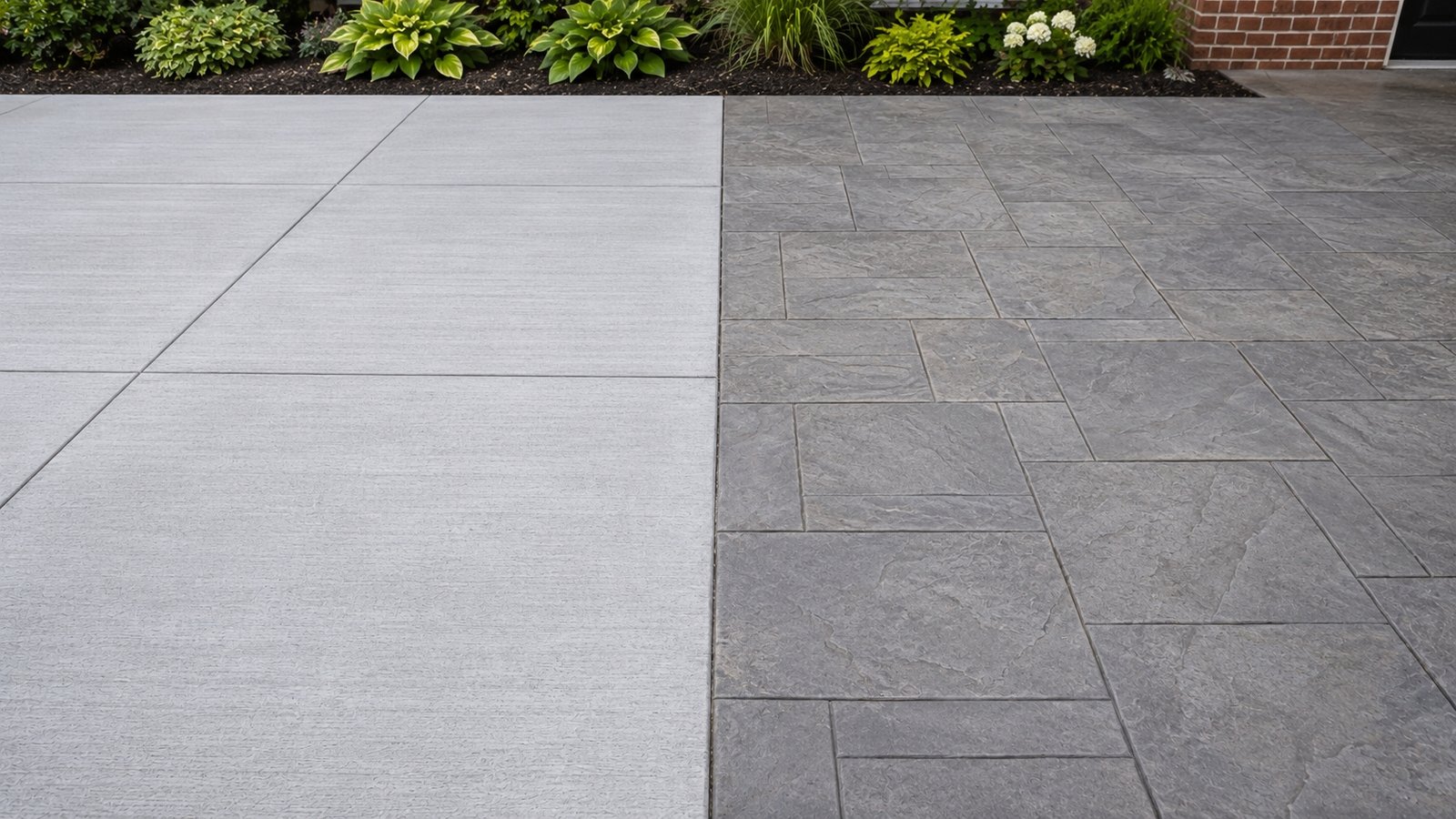
The choice between plain broom-finished concrete and stamped concrete comes up the same way for almost every Wheaton homeowner planning a driveway, patio, or walkway. The contractor quotes plain concrete at one price. Stamped is 40 to 70 percent more. The visual upgrade is real. The question is whether that upgrade earns its keep at resale, or whether it is a premium that mostly benefits the years the current owners spend in the home.
The honest answer depends on three things: where the concrete sits on the property, the price point of the home, and how the rest of the exterior is styled. In Wheaton, with its mix of mid-century ranches, established colonials, and newer construction, the right answer is rarely the same answer twice.
Cost Difference in Wheaton, 2026
Pricing for standard broom-finished concrete versus stamped concrete in Wheaton in 2026 looks roughly like this:
Driveway, 700 square feet:
- Plain concrete: $6,500 to $9,500
- Stamped concrete: $11,000 to $16,500
Patio, 250 square feet:
- Plain concrete: $2,800 to $4,200
- Stamped concrete: $4,800 to $7,500
Front walkway, 80 square feet:
- Plain concrete: $1,000 to $1,600
- Stamped concrete: $1,800 to $3,000
The stamped premium reflects three things contractors pass through: the stamps and color materials themselves, the added skilled labor (stamping a slab is more demanding than finishing one), and the longer timeline (stamping must happen in a narrow window as the concrete sets, requiring tight crew choreography).
Wheaton pricing tracks closely with Glen Ellyn, Lombard, and Carol Stream. Naperville and Hinsdale run slightly higher on the same scope of work. Bartlett and St. Charles tend to run slightly lower.
When Stamped Concrete Earns Its Premium at Resale
Stamped concrete reliably adds resale value in three situations.
The concrete is visually prominent and in a higher-end market. A stamped driveway in front of a $900,000 colonial on a tree-lined Wheaton street reads as intentional design. The same stamped driveway in front of a $350,000 ranch on a busier road reads as overdone. Stamped concrete works when the rest of the home and the neighborhood comps support a premium aesthetic.
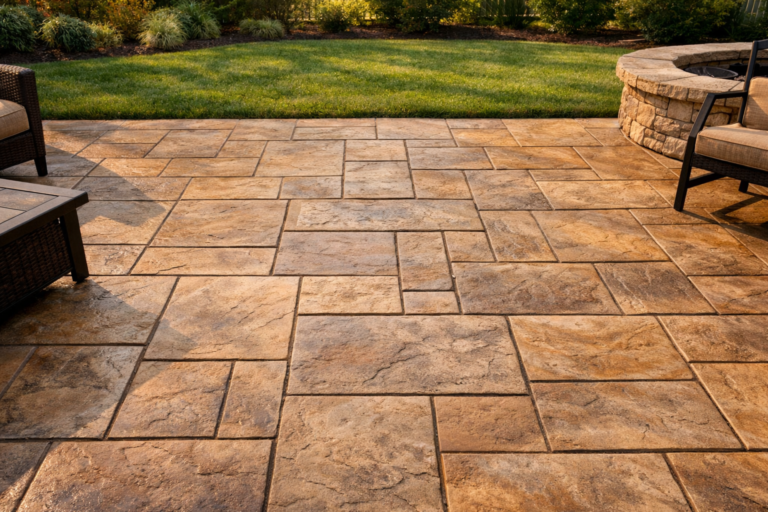
The pattern and color match the home’s existing materials. A slate-pattern stamped patio in charcoal next to a stone-faced home looks engineered. A random-rock pattern in a competing color next to a brick ranch looks like a finish picked from a sample book. Pattern and color choices that echo what is already on the home tend to add value. Choices that compete with the home’s existing materials often subtract from it.
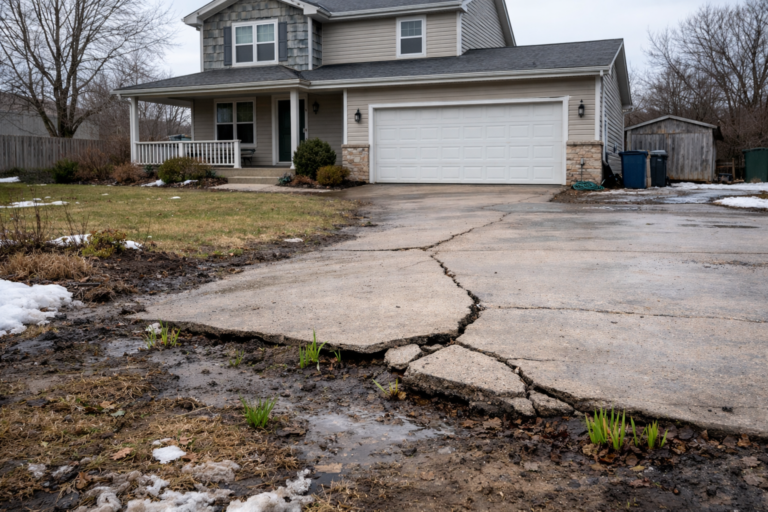
The patio or driveway is replacing something visibly tired. Buyers respond to clear before-and-after value. A stamped patio replacing a cracked, settled plain concrete pad shows up well in listing photos. A stamped patio installed alongside dated landscaping, a weathered fence, and an aging deck just makes the surrounding elements look more dated by contrast.
When Plain Concrete Is the Better Investment
There are also reliable patterns where plain concrete is the correct financial answer.
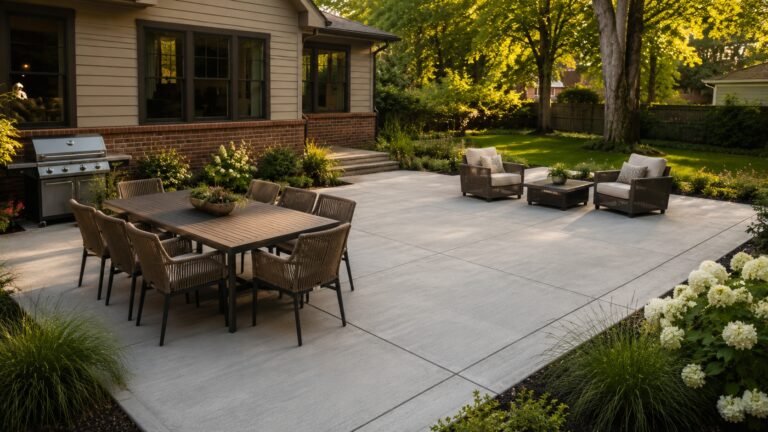
The surface is utility-focused and out of sight. A back patio shielded from the street, used for utility purposes (grill, pool deck, dog run), or simply not central to the home’s curb appeal does not benefit from a stamped upgrade. The premium is wasted because buyers and appraisers do not see it as a feature.
The home sits below the neighborhood’s stamped-concrete threshold. In Wheaton neighborhoods where comparable homes sell for under $400,000, a stamped driveway costing $5,000 more than plain rarely returns that premium at sale. Buyers in that price range tend to value the absence of problems over the presence of upgrades.
The homeowner plans to stay 10 or more years. Stamped concrete dates the same way other style choices date. A pattern that looks current in 2026 may read as a marker of a specific era by 2036. Plain concrete is visually neutral. It does not date because there is no style to date.
The budget is constrained and other improvements compete. Spending the $4,000 to $7,000 stamped premium on a project somewhere else in the home (a new garage door, exterior paint, an updated front entry) often yields a stronger resale return than the same dollars spent upgrading concrete that was already serviceable.
Durability: Mostly a Wash, With Caveats
Both plain and stamped concrete, when poured correctly in Wheaton’s climate, can be expected to last 25 to 35 years. The variables that determine durability are largely the same for both:
- Air-entrained mix at 4,000 psi or higher
- Properly compacted base, especially on Wheaton’s predominantly clay soils
- Adequate control joints to direct cracking
- Slow, moisture-retaining cure
Stamped concrete adds one durability concern: the color, whether applied as a release agent during stamping or as an integral color in the mix, fades over time. Sealing reduces fading but does not eliminate it. After 10 to 15 years, even well-maintained stamped concrete typically shows visible color softening, particularly in sun-exposed areas.
Plain concrete has no color to fade. It develops a weathered patina that most homeowners and buyers accept as normal.
Maintenance Realities Buyers Sometimes Miss
Maintenance costs over the long run favor plain concrete by a small but real margin.
Sealing. Both surfaces benefit from sealing every two to three years in Wheaton’s climate. Stamped concrete sealing is more expensive per square foot, often by 30 to 50 percent, because the textured surface requires more material and more careful application.
Color refresh. Stamped concrete that has faded can be refreshed with tinted sealers or full color resurfacing. This is a real maintenance cost that plain concrete does not carry.
Repair visibility. A crack in plain concrete is a crack. A crack in stamped concrete is a crack that disrupts a pattern. Repairs to stamped concrete are visible in a way that plain concrete repairs often are not.
For a homeowner planning to live with the surface for 15-plus years, those small annual differences add up.
How This Plays in Wheaton Specifically
A few Wheaton-specific factors shape the decision.
Historic district considerations. Parts of central Wheaton fall under historic preservation guidelines. Stamped concrete patterns that mimic traditional materials (slate, brick, cobble) tend to fit those guidelines. Patterns that read as obviously modern or themed often do not. Verify any constraints through the City of Wheaton Planning and Community Development before specifying a pattern.
School district price compression. Wheaton’s strong school districts pull buyers across a wider income range than the neighborhood appearance might suggest. Homes that look modest may still command premium offers because of the schools. The implication: stamped concrete on a smaller home in a strong school zone may pay off better than the same upgrade on a larger home in a less competitive zone.
Established landscaping. Wheaton has a higher-than-average density of mature trees and established landscaping. Stamped concrete next to mature plantings tends to age in concert with the landscape. Plain concrete with the same plantings reads as more utilitarian, neither better nor worse, just different.
A Practical Decision Framework
For most Wheaton homeowners, the choice can be narrowed with three questions:
- Is the concrete surface part of the home’s visible curb appeal or in a hidden utility area? Visible favors stamped. Hidden favors plain.
- Are nearby comparable homes already showing decorative hardscape, or are they predominantly plain? Matching the neighborhood’s prevailing standard tends to optimize resale return. Standing out costs more than it returns in either direction.
- What is the planned holding period? Five years or fewer favors stamped (recover at sale before color fades). Fifteen-plus years favors plain (lower lifetime maintenance, no dating).
Frequently Asked Questions
Does stamped concrete crack more than plain concrete?
Not appreciably. Cracking is driven by base preparation, mix design, and joint placement, all of which are the same for both finishes. Stamped concrete cracks are more visually disruptive because they break the intended pattern.
Can plain concrete be stamped after the fact?
No. Stamping must happen while the concrete is freshly poured and still workable. Existing plain concrete can be resurfaced with a stamped overlay, but overlays are a different product with shorter service life, typically 8 to 15 years. Overlays make sense as a refresh, not a long-term replacement.
What stamped patterns hold up best in Wheaton?
Slate patterns, ashlar (random rectangular cut stone), and seamless texture patterns tend to age well because they do not lock into a single style era. Highly themed patterns (rope edges, novelty borders, faux wood) often look dated within a decade.
Is stamped concrete slippery when wet?
Lightly textured patterns are slip-comparable to a plain broom finish. Smoother stamped patterns can be slipperier when wet, especially with algae buildup. A textured-additive sealer addresses this.
How long after pour should color be expected to start fading?
Noticeable color softening typically begins in years 5 to 8, depending on sun exposure and sealing frequency. South-facing surfaces fade fastest. Regularly sealed surfaces fade more slowly.
How does stamped concrete compare in cost to pavers?
Stamped concrete typically runs 25 to 40 percent less than comparable paver work for the same square footage. Pavers offer easier individual repair and higher long-term flexibility. Stamped concrete offers cleaner sight lines and lower maintenance complexity. Either can be the right answer depending on the project. The publication’s coverage of stamped concrete patio installation in nearby Schaumburg goes deeper on patterns, colors, and durability specifics.
Does stamped concrete affect home insurance or property taxes?
Stamped concrete itself does not change insurance rates and rarely triggers reassessments at the property tax level in DuPage County. The exception is large projects involving structural elements or significant new footprint, which can prompt review.
The Bottom Line for Wheaton Homeowners
Stamped concrete pays off when the surface is visible, the home and neighborhood support the premium aesthetic, and the holding period is short to medium. Plain concrete is the better financial choice when the surface is hidden, the home sits below the neighborhood’s stamped threshold, or the planned holding period is long.
Neither choice is wrong as a category. The wrong move is paying a stamped premium where it will not be seen, or installing plain concrete on a high-visibility surface where the neighborhood expects more. Homeowners weighing the decision benefit from getting itemized quotes that show the standard and decorative options side by side.
The publication’s free estimate request form connects readers with a vetted local contractor. For deeper context on driveways specifically, the concrete and driveways services overview and the look at home value impact of a new concrete driveway in Arlington Heights provide useful starting points. For patios, the patio and outdoor living services hub and the Naperville patio ROI analysis cover adjacent decisions.